
Marshall's Principles and Today's Policy Planning Staff
by Jared Banks
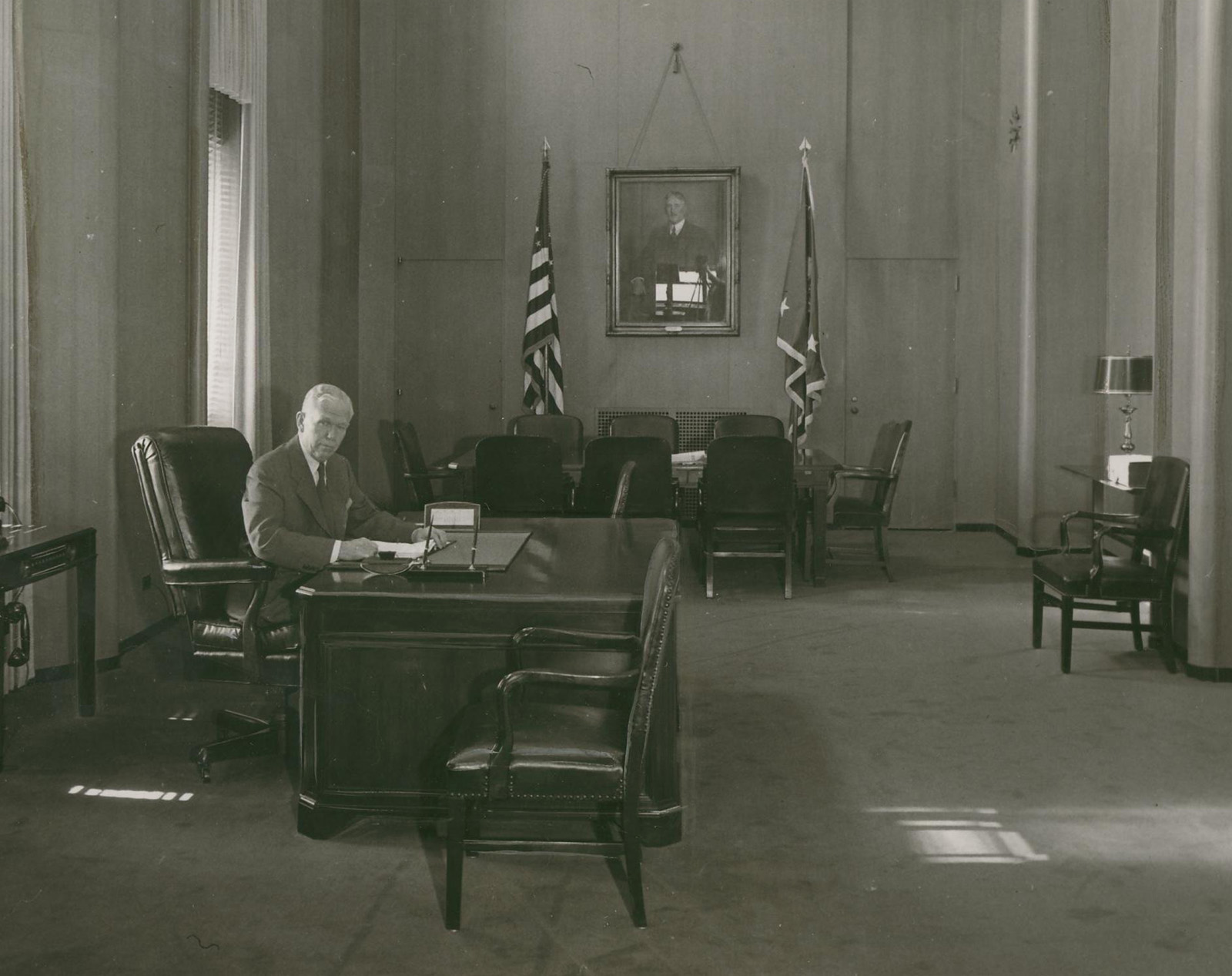
Secretary of State George C. Marshall seated in his State Department office, May 14, 1947.
During my career as a Foreign Service Officer at the Department of State, I had the privilege of being part of the Secretary’s Policy Planning Staff (S/P) for three years under two political administrations. Although the ways S/P operates has varied since its creation in 1947, some of George Marshall’s driving principles remain central to its mission. This includes his oft-quoted counsel to “avoid trivia” and his value he placed on hearing dissenting perspectives.
There are a few ways that words can become immortal. For example, Dante Alighieri penned “Abandon all hope, ye who enter here” as the inscription at the top the gates of Hell in Inferno. And “Give me your tired, your poor / Your huddled masses…” from Emma Lazarus’ sonnet has long served as a beacon of hope on the pedestal of the Statue of Liberty. To be clear, I am not suggesting S/P was hellish or a haven for homeless foreign policy wonks. On the contrary, it was one of the most rewarding assignments of my career. My point is that words sometimes gain momentum beyond their immediate context and take on a life of their own. And that was certainly the case when George Marshall, as Secretary of State, gave George Kennan some simple advice. The two words that were to guide Kennan’s leadership of S/P—that were spoken, neither written nor engraved—were “avoid trivia.”
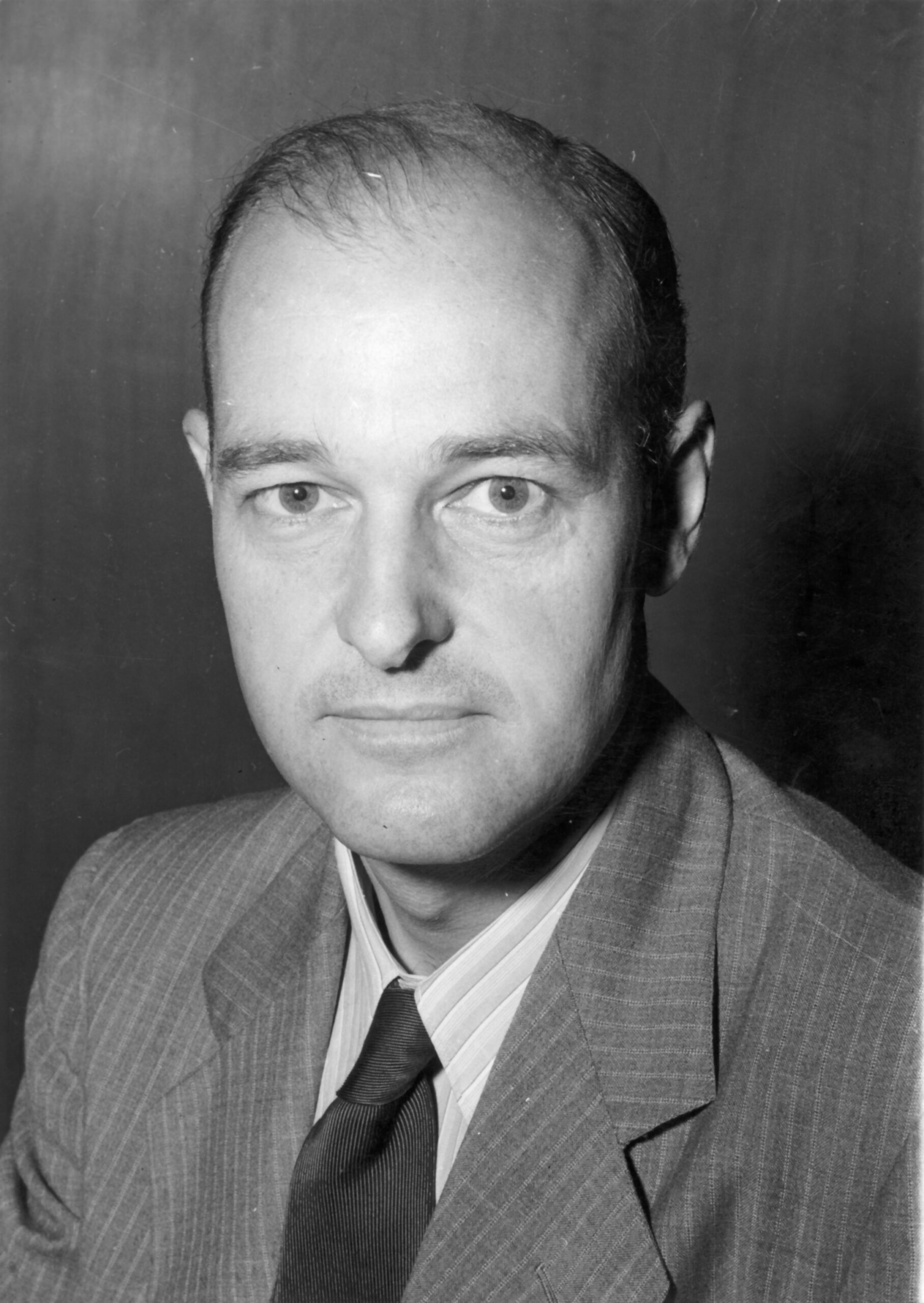
George S. Kennan, first Director of Policy Planning (May 5, 1947–May 31, 1949)
By the time I joined S/P in June 2019, that simple counsel had proliferated across the foreign policy and national security world. “Avoid trivia” had showed up in books, panels, speeches, and various types of articles—even reportedly on a seal for S/P. One of my colleagues in S/P had magnets made for all of us, and mine is still beside my desk as a daily reminder since leaving S/P in August 2022.
The drawback of “avoid trivia” is being a double negative. The word “avoid” tends to mean steering clear of something, rerouting from a risk, and making a defensive move. It does not imply choosing an affirmative direction toward a desirable destination. Similarly, “trivia” has negative connotations such as nonsense, minutiae, and irrelevance. Except in knowledge games like Trivial Pursuit and Jeopardy, trivia doesn’t generally have a positive association in the world, much less in foreign policy. On the contrary, trivia implies the opposite of contributions that are valuable, significant, weighty, relevant, etc. As such, “avoid trivia” for S/P is an admonition not to get mired in bureaucratic minutiae, pulled into day-to-day operations, or consumed by the routine and reactive tendencies of almost any organization. These two words are thus implicitly an affirmative instruction for S/P—and strategists more generally—to focus on the big picture, look over the horizon, think long-term, see the forest over the trees, bring an independent perspective, and proactively shape forward-looking policies.
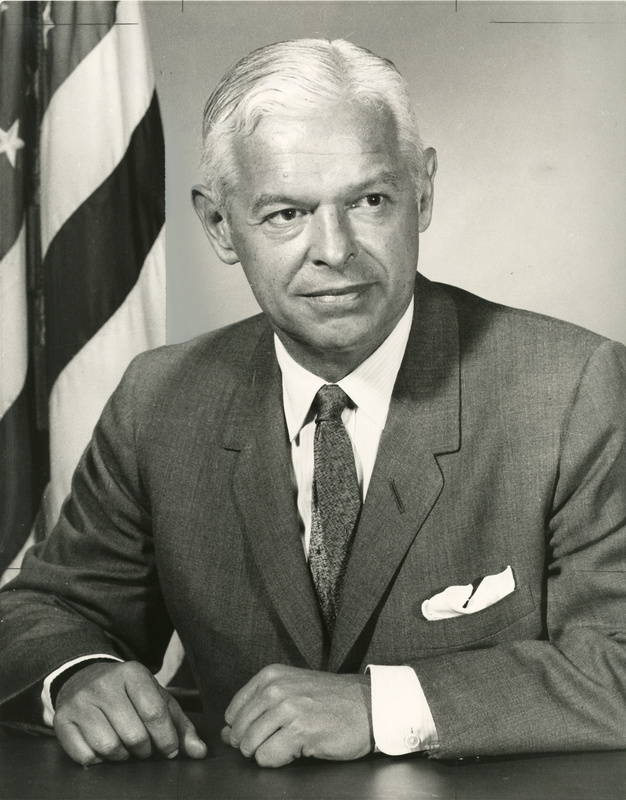
Paul H. Nitze, second Director of Policy Planning (January 1, 1950–May 28, 1953)
Consonant with this admonition of what to avoid was how much Marshall also valued hearing different perspectives, including dissent, as part of the decision-making process. The most widely cited example of the importance Marshall placed on this principle comes from an exchange he reportedly had with subordinates in 1939. General Omar Bradley and other junior officers were apparently called into Marshall’s office, who observed: “You haven’t disagreed with a single thing I had done all week.… Unless I hear all the arguments against something I am not sure whether I’ve made the right decision or not.”1 Although that exchange took place in a military context, the same principle and candor was essential for S/P to be successful. It meant S/P should be providing the Secretary of State and other senior government leaders both a forward-looking and frank perspective on foreign policy matters—even, or especially, if it went against the consensus view.
There is lots of commentary and analysis on the changes to domestic and foreign policies after a change of administration, particularly when that corresponds to a change of political party in the White House. Less studied or understood is the impact on the S/P office specifically. As well documented in a study by the Department of State’s Office the Historian, the way S/P operates has always depended on the director’s relationships with more senior administration leadership, and on who is in charge at State and the White House. Nevertheless, these Marshall principles were alive and well in S/P during my time working for Secretary Michael Pompeo, with Peter Berkowitz as the director, and for Secretary Antony Blinken, with Salman Ahmed as the director. Although policy priorities changes and their approaches differed, Peter and Salman were both great bosses, who I admire and became my friends.
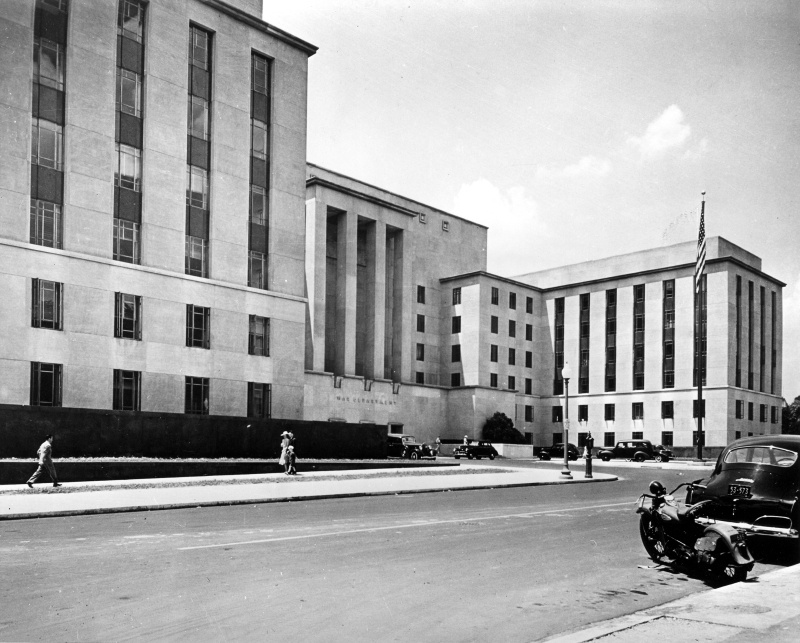
Headquarters of the United States Department of State, Washington D.C., ca. 1945. National Archives photo.
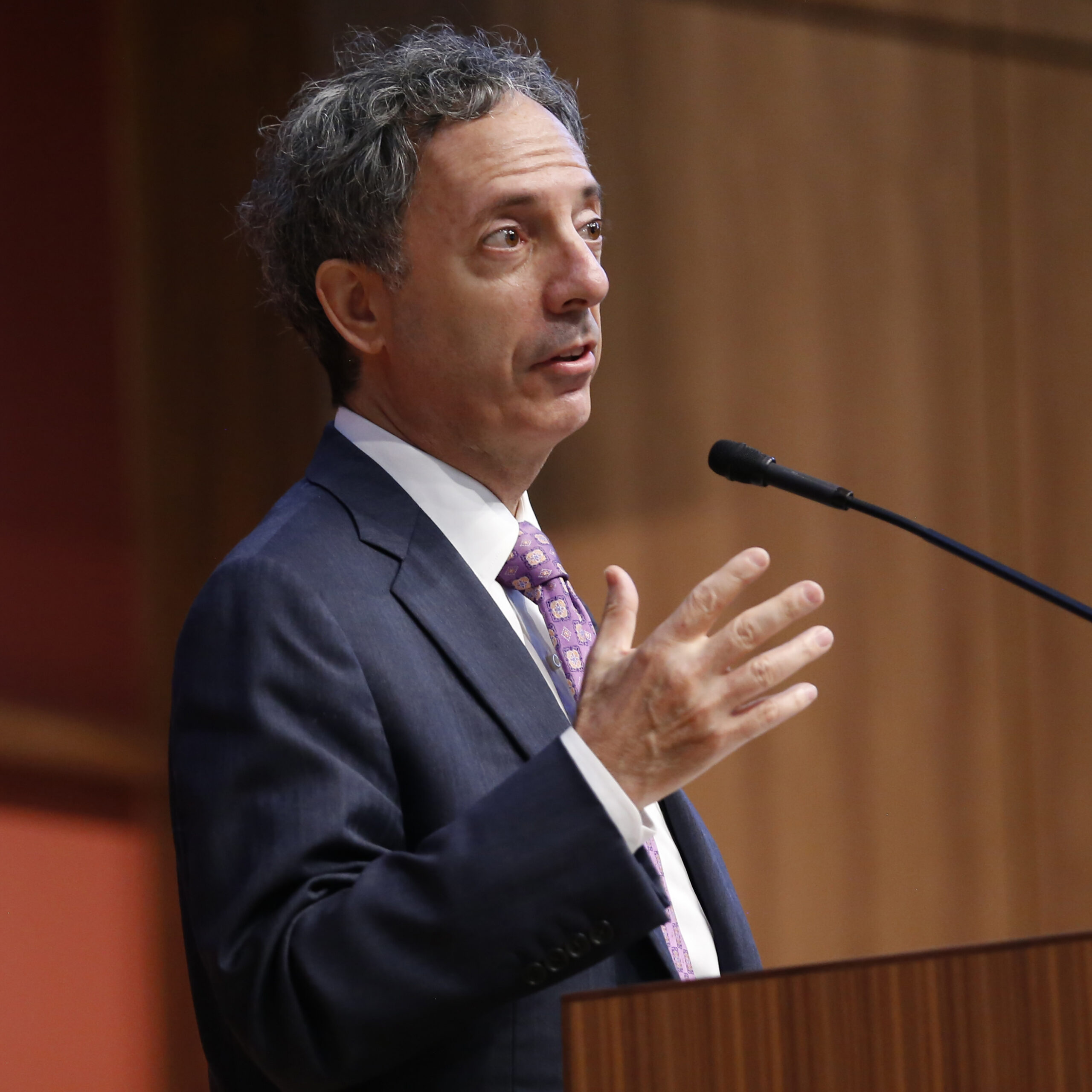
Peter Berkowitz, 31st Director of Policy Planning. Photo by Eric Draper.
Under Peter Berkowitz’s leadership, the atmosphere felt the most like working in academia since I finished my PhD. We were told Secretary Pompeo wanted S/P to provide him with creative, out-of-box thinking on known and unknown foreign policy challenges. There were a few advantages to this approach. First, the staff were given extraordinary independence and freedom of inquiry, with latitude to research and write “Notes” for the Secretary on very diverse topics. Second, we were not required to “clear” these papers with others in the Department, which is very unconventional in State’s culture. That said, I used this permission judiciously and ended up writing what I called two flavors of Notes: “collaborative” and “cantankerous.” For example, when I was going to advocate for a policy shift that I knew others in State would likely support, I would consult with the relevant stakeholders in advance. This resulted in Notes that already had their input and buy-in, which had the benefit of immediate momentum for implementation. When I knew my dissenting perspective or recommendation would face stiff resistance, I would flag the likely blowback to Peter, but the Notes would go forward anyway. Yes, he received a few phone calls from the leadership of regional bureaus that hadn’t been consulted but he always had my back. I just assumed I would never get a future assignment in those bureaus after S/P, but it was a risk I was willing to take as part of the S/P mission. Third, freedom on inquiry did mean not full freedom of speech (i.e. verbosity). Secretary Pompeo had one strict rule: the Notes could not exceed two pages. This meant expansive research had to be converted into disciplined thinking and writing. The downside of this Pompeo/Berkowitz model for S/P was the unpredictability on whether the Notes would have an impact. And the independence meant the Notes sometimes reflected more of a single member’s perspective than the weight of an authoritative recommendation. We also had to review enormous volumes of paper headed to the 7th floor principals. Although we divided this workload across the staff according to our portfolios, it was still very time-consuming. When those memos covered routine administrative details, it admittedly felt like we had strayed from Marshall’s advice. However, I generally felt like there was a good balance in the workload and the clearance process provided valuable visibility into what was happening across State.
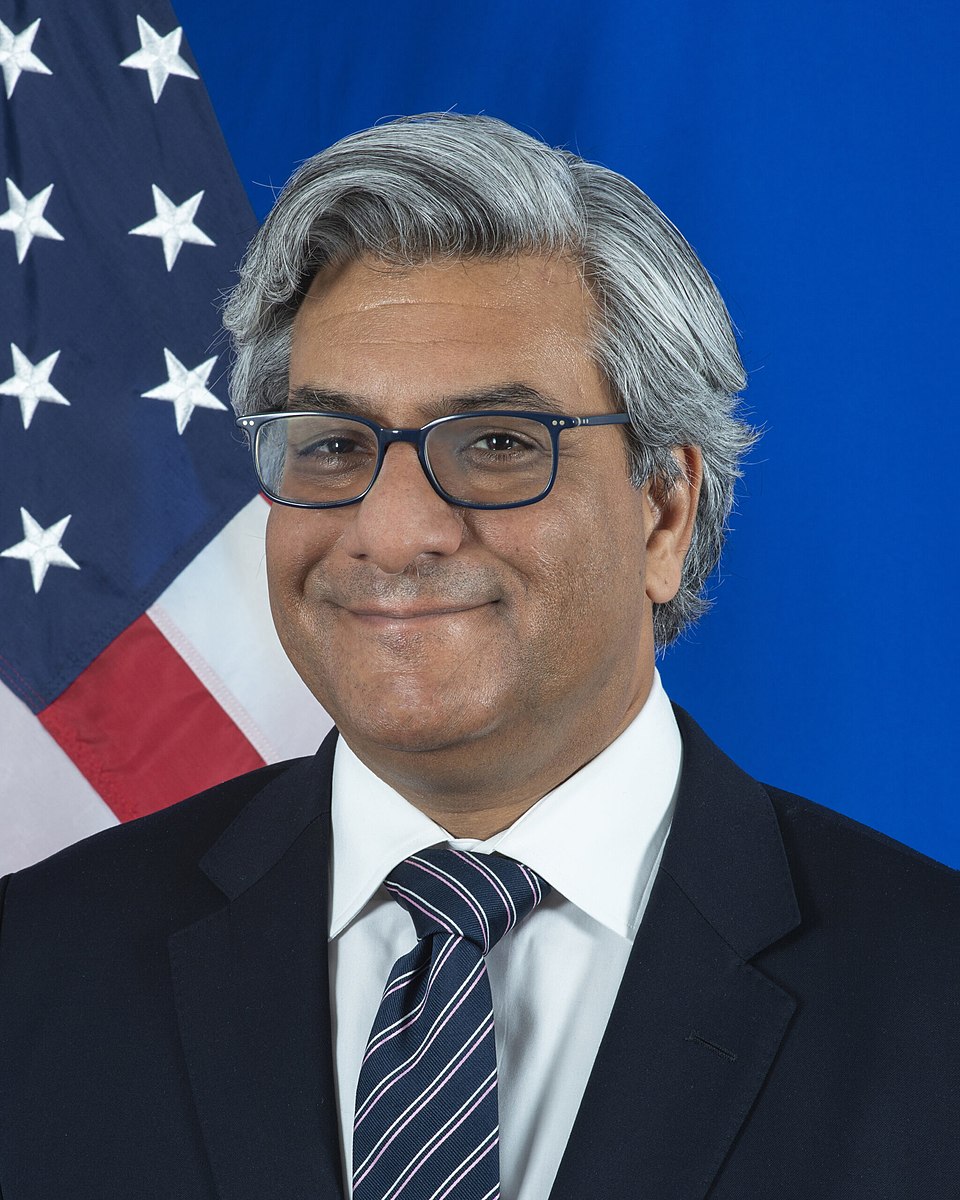
Salman Ahmed, 32nd Director of Policy Planning.
Under Salman Ahmed’s leadership, S/P adopted a new business model to meet Secretary Blinken’s vision. Although the mission for S/P remained the same, the details changed. For example, while I wrote a Note almost every month for Secretary Pompeo during those 18 months, I only wrote a handful of Notes for Secretary Blinken during those 18 months – and all of them were done in coordination with the respective bureaus across State. We were encouraged to explore new terrain that could inform and drive the agenda, but our function was less on being “idea fairies.” There were a few advantages of this Blinken/Ahmed model. First, this maximized the chances that whatever we wrote would be successful at setting the agenda and having it implemented because the collaborative process empowered and sought early buy-in from the respective bureaus. Second, this created more Department transparency on the policy process while also providing the Secretary with the ability to weigh different options. For example, when S/P couldn’t reach consensus on a policy recommendation, a “split memo” went forward with multiple perspectives represented. Third, we didn’t have strict limits on length, which allowed us to develop more detailed analysis and recommendations. And fourth, Salman convinced the “Line” team that manages the paper flow that S/P’s mandatory clearances were not the best use of our time; as a result, all memos were was marked as “info” by default, leaving it to the discretion of S/P staff whether to weigh in. One of the downsides of this business model for S/P was that such consultations take time, sometimes too much, and risked watering down dissenting perspectives. The other, which says something about my personality, is that I missed crafting Notes that had an element of surprise and ruffled feathers.
Although it has been a few years since I left S/P and its seal has faded into the archives of history, these principles that were essential for George Marshall and continue to have a role in my life. For example, the affirmative flip side of “avoid trivia” has become one of my daily imperatives to always “add value” and stay strategic. In addition, I’m a diplomat whose craft includes learning how to frame unpleasant and unwelcome messages in acceptable ways to be more persuasive and increase the likelihood of success. However, regardless of the packaging, and especially during internal deliberations, it is essential to speak truth to power. And Marshall is an admirable example of a leader who expected that from his team and understood that U.S. policy and operations would be better as a result.
Jared Banks was in the Department of State’s Foreign Service for over 20 years before joining MITRE’s Center for Policy and Strategic Competition. He was a Fulbright Fellow in Mozambique and completed a PhD in African Cultural Studies at the University of Wisconsin-Madison. He entered public service as a Presidential Management Fellow. He currently works for Systems Planning & Analysis, supporting the Department of Defense’s Office of Global Investment and Economic Security.