
Pilot James Stewart and the B-24
"Somebody sure could get hurt in one of these damned things"
James Stewart, best known to moviegoers as Jimmy, entered the Second World War with an established civilian flying record and went on to command a B-24 squadron, fly combat missions in Europe, and remain in the Air Force Reserve for decades. His wartime career also gestures towards two other American ideas of civic responsibility. General George C. Marshall believed that a citizen army asked to accept discipline, danger, and possible death had to understand the cause for which it served. He enlisted director Frank Capra, whose crowd-pleasing films posed serious questions of conscience and citizenship while remaining palatable for mass audiences. Stewart, already identified with Capra’s characters, chose the practical responsibilities of military service. This is Stewart’s story, but it is also the story of how command, persuasion, and service met in one wartime life.
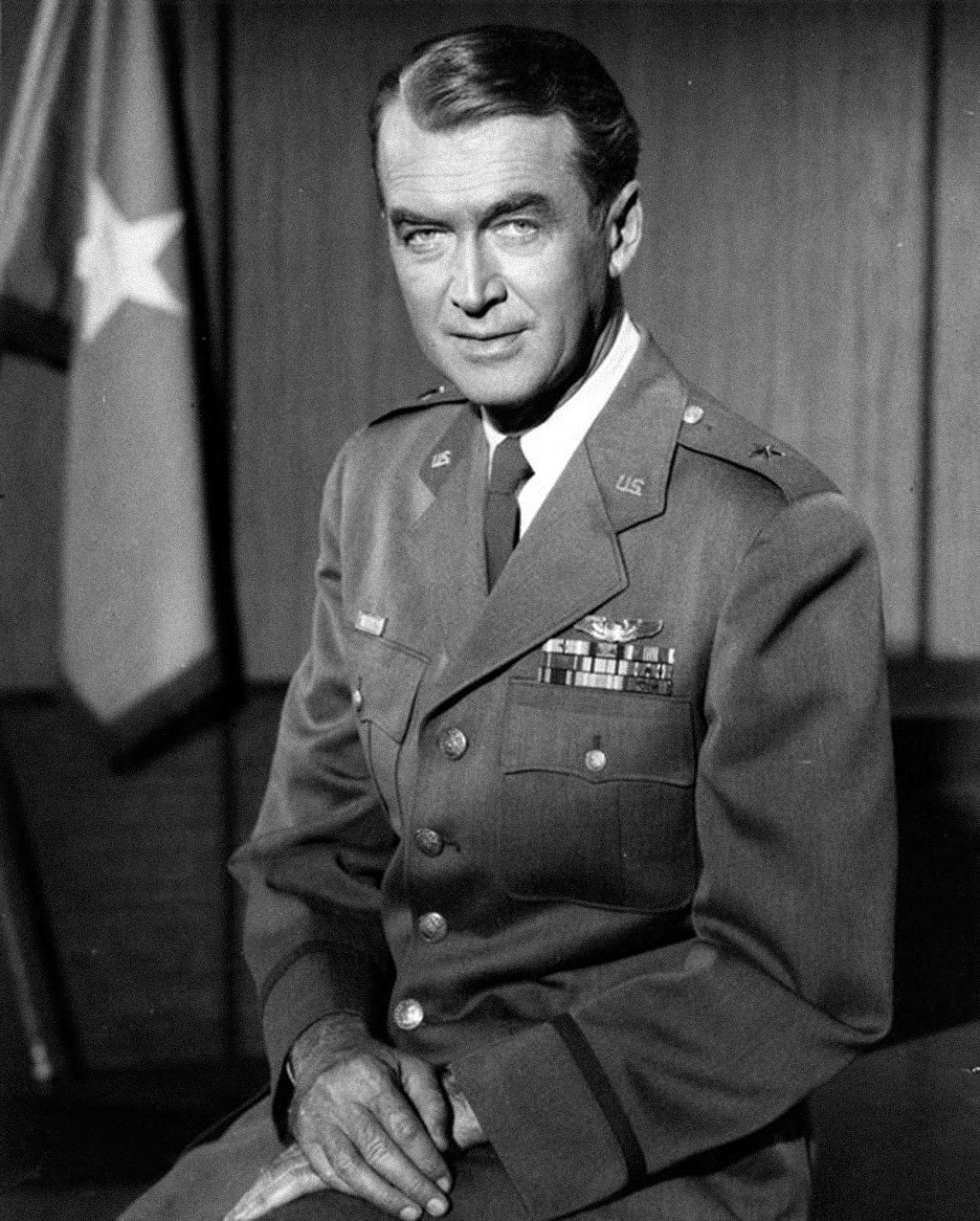
Brig. Gen. Jimmy Stewart. Jimmy Stewart Museum photo.
Flying Before the War
James Stewart loved airplanes. As a young boy, he saved money from his paper route to ride in a biplane, after spending weeks convincing his mother it was safe. After graduating from Princeton, he took flying lessons and earned both private and commercial licenses. He bought a Stinson 105 to build flying hours, knowing that it was the model the Army Air Corps used to train pilots. He was sure the United States would enter the war in Europe, and he wanted to continue the family legacy of serving in the Army by flying.
From Hollywood to the Army Air Corps
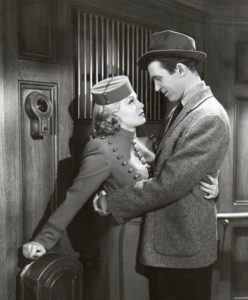
Lana Turner and Jimmy Stewart in Ziegfeld Girl. Public domain.
Stewart was wrapping up production of Ziegfeld Girl—in which he starred with an ensemble cast including Lana Turner, Judy Garland, and Hedy Lamarr—when he entered the Air Corps as a private. He spent nine months training at Moffett Field, California, where he studied for and passed the examination to be commissioned. His 400 hours of flying time got him into the cadet program, but not without a fight. Stewart was in his thirties; most military pilots were in their early twenties. He was also underweight.
Before the war, Capra had helped make Stewart one of Hollywood’s most recognizable actors. In You Can’t Take It with You and, especially, Mr. Smith Goes to Washington, Stewart played men whose decency and sense of public duty were tested by money, power, and institutions that had lost sight of their purpose. Those performances did not predict his military career or substitute for it. They did, however, give the public a familiar image of Stewart before he entered the Army Air Corps.
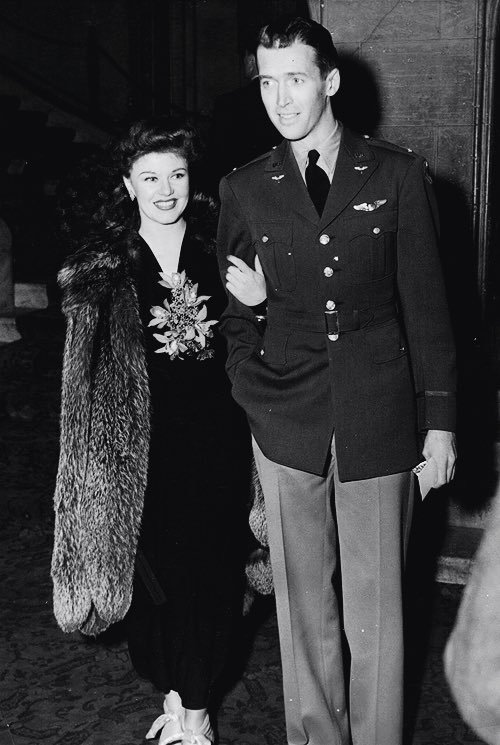
Stewart spent nearly a year as a training pilot, instructing in the AT-6, AT-9, and B-17. In February 1942, he had to present the 1941 Oscar for Best Actor, having won in 1940 for The Philadelphia Story. He wore his uniform and pilot’s wings and accompanied Ginger Rogers to the ceremony.
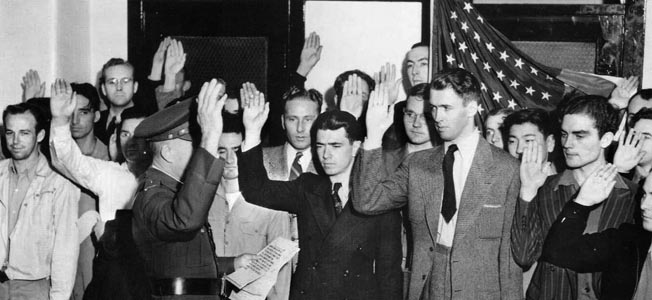
Jimmy Stewart being inducted into the Army Air Corps. Warfare History Network photo.
“In combat, the airplane was no match for the B-17 as a formation bomber above 25,000 feet, but from 12,000 to 18,000 it did a fine job.”
Recruiting and an Overseas Assignment
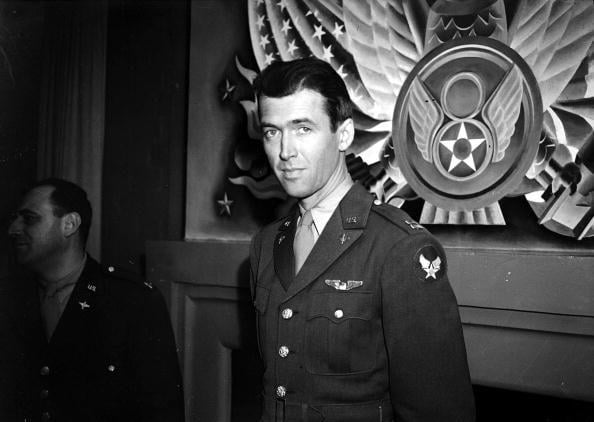
Capt. Jimmy Stewart in his only overseas press conference. Jimmy Stewart Museum photo.
Stewart did not want to spend the war entirely as a training pilot. Before he left for England, however, the Army Air Forces used his celebrity in Winning Your Wings, a 1942 recruiting film directed by John Huston. The National Archives credits the film with inspiring 100,000 recruits and identifies it as a precursor to the Army Air Forces’ First Motion Picture Unit.
The film belonged to a larger wartime effort to speak directly to a military made up overwhelmingly of civilians. Marshall had insisted that soldiers be informed about what they were fighting for. When pamphlets and officers’ lectures failed to do that work, he brought in Capra to make the Army’s Why We Fight films. Capra’s series explained the war to newly inducted soldiers. Winning Your Wings had a narrower task: it used Stewart’s fame to encourage civilian men to enter the Army Air Forces.
This distinction matters. Stewart’s public image could help bring men into uniform, but he did not want celebrity to define his own war. He continued to press for an overseas assignment. In the fall of 1943, he deployed to England as commanding officer of the 703rd Bomb Squadron, 445th Bomb Group, flying the B-24 “Liberator,” a four-engine heavy bomber.
Stewart wanted his name to recede once he was in uniform. He insisted that reporters stay away and gave only one short overseas press conference.
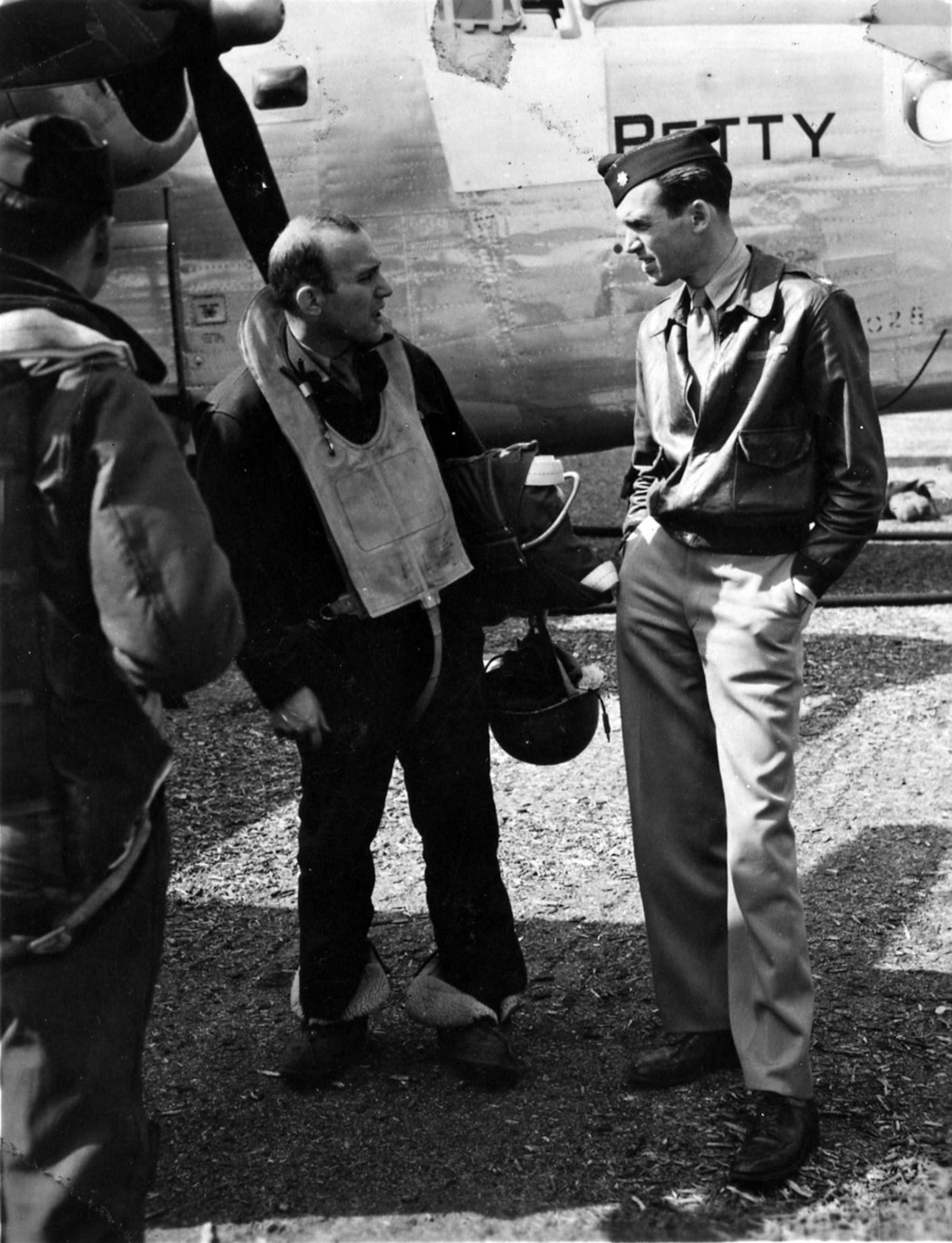
Maj. Jimmy Stewart confers with a B-24 crew member. U.S. Air Force photo. Public domain.
“Sergeant, somebody sure could get hurt in one of these damned things.”
The B-24
The B-24 was a bear to fly and showed poorly at low speeds, but it had a longer range and greater bomb capacity than the B-17. It was the most-produced airplane of the Second World War; approximately 6,000 more B-24s were built than B-17s. Stewart said of the plane, “In combat, the airplane was no match for the B-17 as a formation bomber above 25,000 feet, but from 12,000 to 18,000 it did a fine job.”
Combat Missions and Command
Stewart was promoted to major in January 1944, but only after refusing the promotion until his pilots received promotions as well. On March 31, 1944, he was appointed operations officer of the 453rd Bomb Group. He continued to fly combat missions and ended the war with twenty.
The combat missions Stewart flew were not without peril. Flight crews faced temperatures of -40 degrees Fahrenheit in their unpressurized aircraft and had to knock ice from their oxygen masks. Some missions were too far to have constant fighter protection, so the bombers flew alone, facing enemy fighters.
On one trip during the winter of 1944, an anti-aircraft shell burst in the wheel well of the plane, creating a large hole between the pilot and co-pilot through which they could see the German countryside miles below. Stewart lost his map case and parachute in the explosion, and when the plane landed, it cracked in half. Stewart remarked to one of the ground crew, “Sergeant, somebody sure could get hurt in one of these damned things.”
In April 1945, Stewart was promoted to colonel and named chief of staff of the 2nd Combat Wing, 2nd Air Division. He returned to the United States in September 1945 and stood at the bottom of the ship’s gangplank, shaking the hands of all the men with whom he had served.
Stewart was awarded the Distinguished Service Medal, the Distinguished Flying Cross with oak leaf cluster, the Air Medal with three oak leaf clusters, and the French Croix de Guerre with Palm, among others.
The screen roles Capra had given Stewart and Stewart’s service were obviously not the same: one was acting, and the other was action. But both now occupied the same biography. Capra had made civic conscience legible through an ordinary man facing public failure. Stewart had accepted the actual burdens of command within the citizen army Marshall had built and trained.
After the War
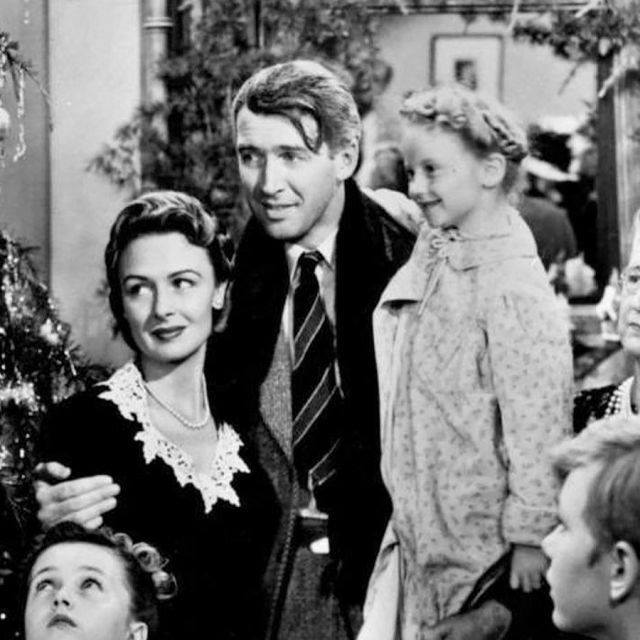
Donna Reed and Jimmy Stewart in It’s a Wonderful Life. Jimmy Stewart Museum photo.
Upon returning to Hollywood, Stewart found himself seriously unemployed. Frank Capra had also returned from military service with no immediate project, but soon cast Stewart as George Bailey in It’s a Wonderful Life, their first film together after the war.
It’s a Wonderful Life did not do well at the box office, but has since become perhaps the American Christmas classic. Its return to Capra’s old concerns—an ordinary citizen, a local community, and the claims people make on one another—did not turn the immediate or lingering effects of Stewart’s military service, or that of others, into a plot. Rather, their reunion brought together a director who had spent the war explaining public obligation and an actor who had spent it carrying military responsibilities far beyond the uses of celebrity.
Stewart went on to make many more movies, among them Otto Preminger’s Anatomy of a Murder, key works in Alfred Hitchcock’s mature period such as Vertigo, and John Ford’s The Man Who Shot Liberty Valance. He also returned to aviation on screen, playing Charles Lindbergh in The Spirit of St. Louis and Lt. Col. “Dutch” Holland in Strategic Air Command, though contract restrictions kept him from doing the flying in either film.
Off screen, Stewart remained in the Air Force Reserve, retiring in 1968 as a brigadier general. That long service gives the larger pattern its force. Marshall’s responsibility was to explain why free citizens were being asked to serve; Capra’s was to make public ideals intelligible through film; Stewart’s was neither symbolic nor rhetorical. He accepted the work of an officer, in war and for more than two decades afterward.
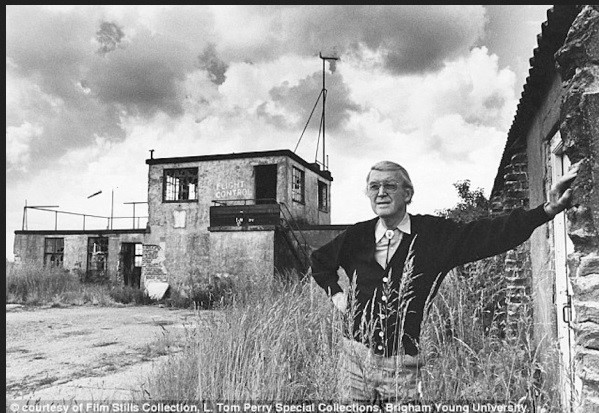
Jimmy Stewart visiting his Air Forces base in England, 1985. L. Tom Perry Special Collections photo.
Direct quotes from Mission: Jimmy Stewart and the Fight for Europe by Robert Matzen.
Before becoming director of library and archives at the George C. Marshall Foundation, Melissa was an academic librarian specializing in history. She and her husband, John, have three grown children and live in Rockbridge County with two large rescue dogs. Keep up with her @MelissasLibrary.
Explore More from the Marshall Foundation
Read more: