
How a 10-minute speech at Harvard launched the largest peacetime recovery program in history
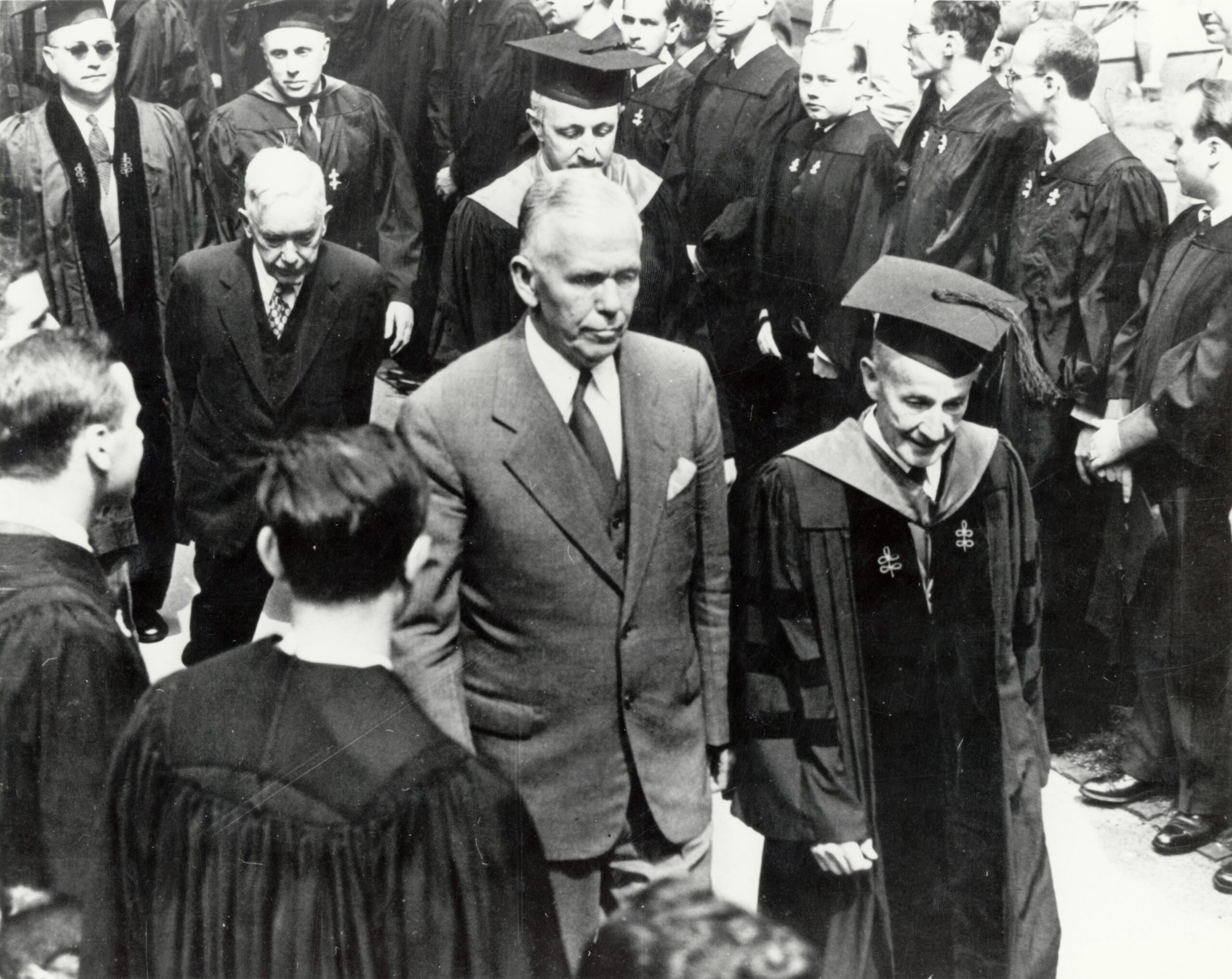
Secretary of State Marshall in procession to receive honorary L. L. D. at Harvard University, June 5, 1947.
“The world situation is very serious.”
George C. Marshall
Harvard University, June 5, 1947
Hear it from Marshall Himself
Before anything else, listen to the speech. On the afternoon of June 5, 1947, Secretary of State George C. Marshall stood before a crowd of 15,000 in Harvard Yard and delivered an address that would reshape the postwar world. It ran about ten minutes. The crowd had come to see one of the most admired public servants in America receive an honorary degree, and left having witnessed world history: as Marshall began to read, the carefully worded remarks on Europe’s political and economic crisis signaled something far larger.
Listen
The Foundation holds both the State Department handout version and a transcription from the recorded tape, which includes Marshall’s improvised opening and closing remarks, the only version that captures his unscripted reflection that “the whole world of the future hangs on a proper judgment.”
Why Now?
The Crisis Behind the Speech
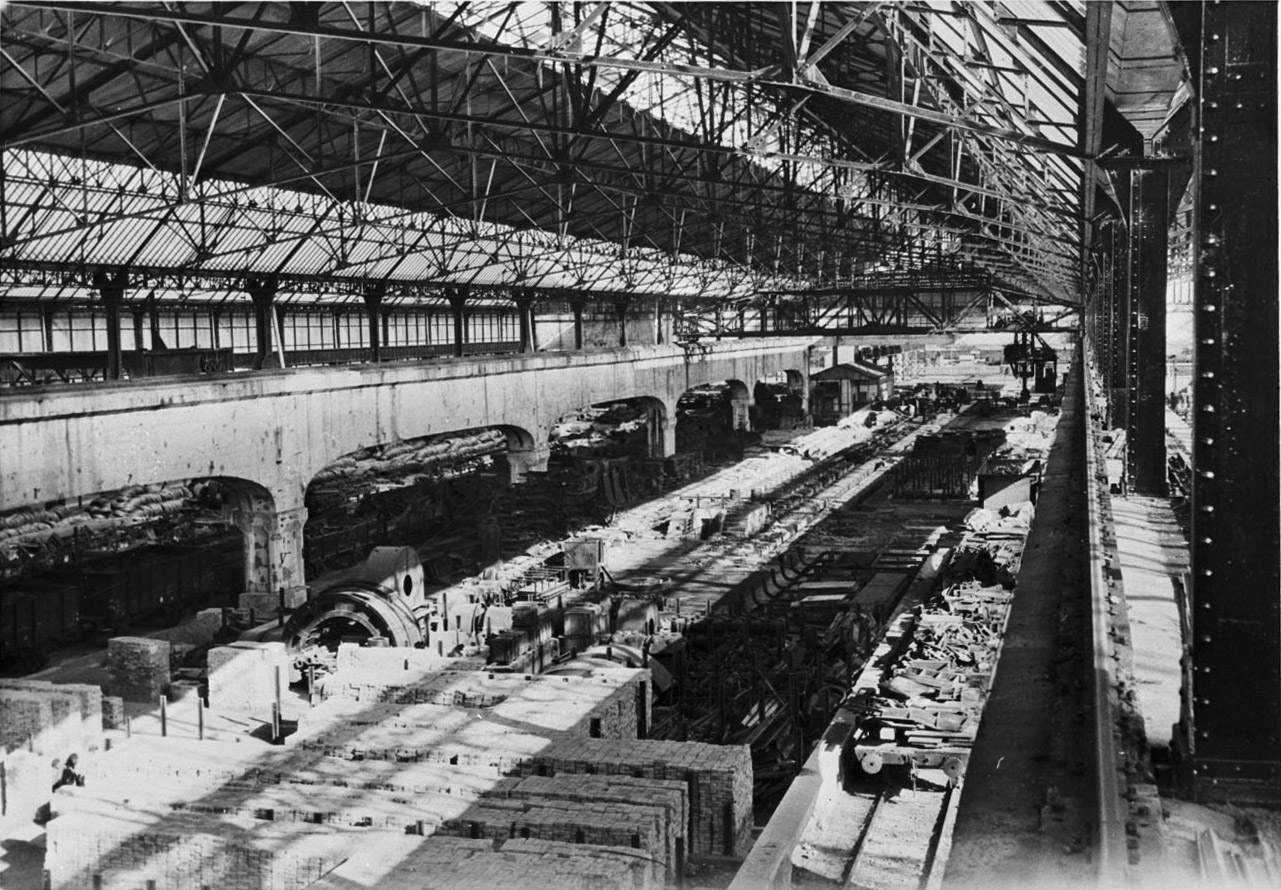
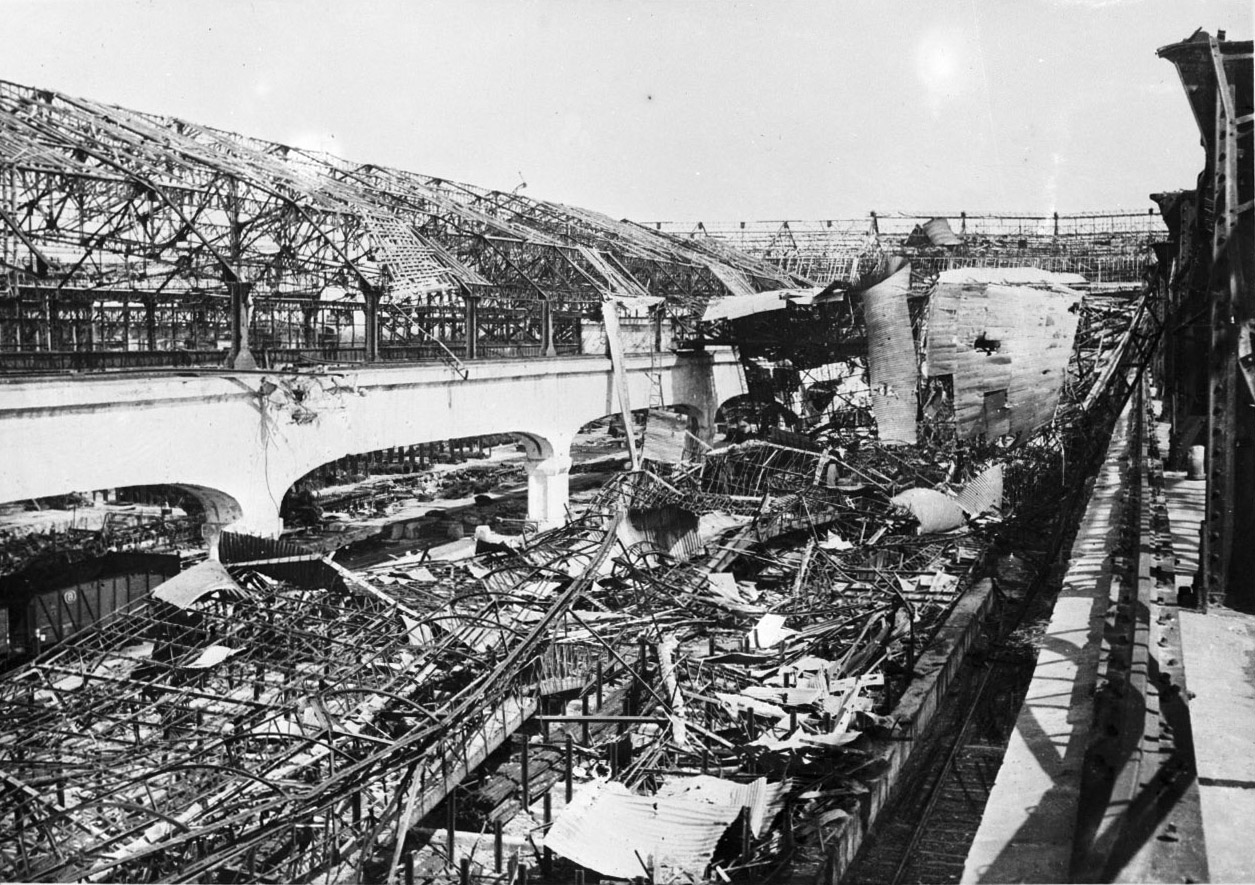
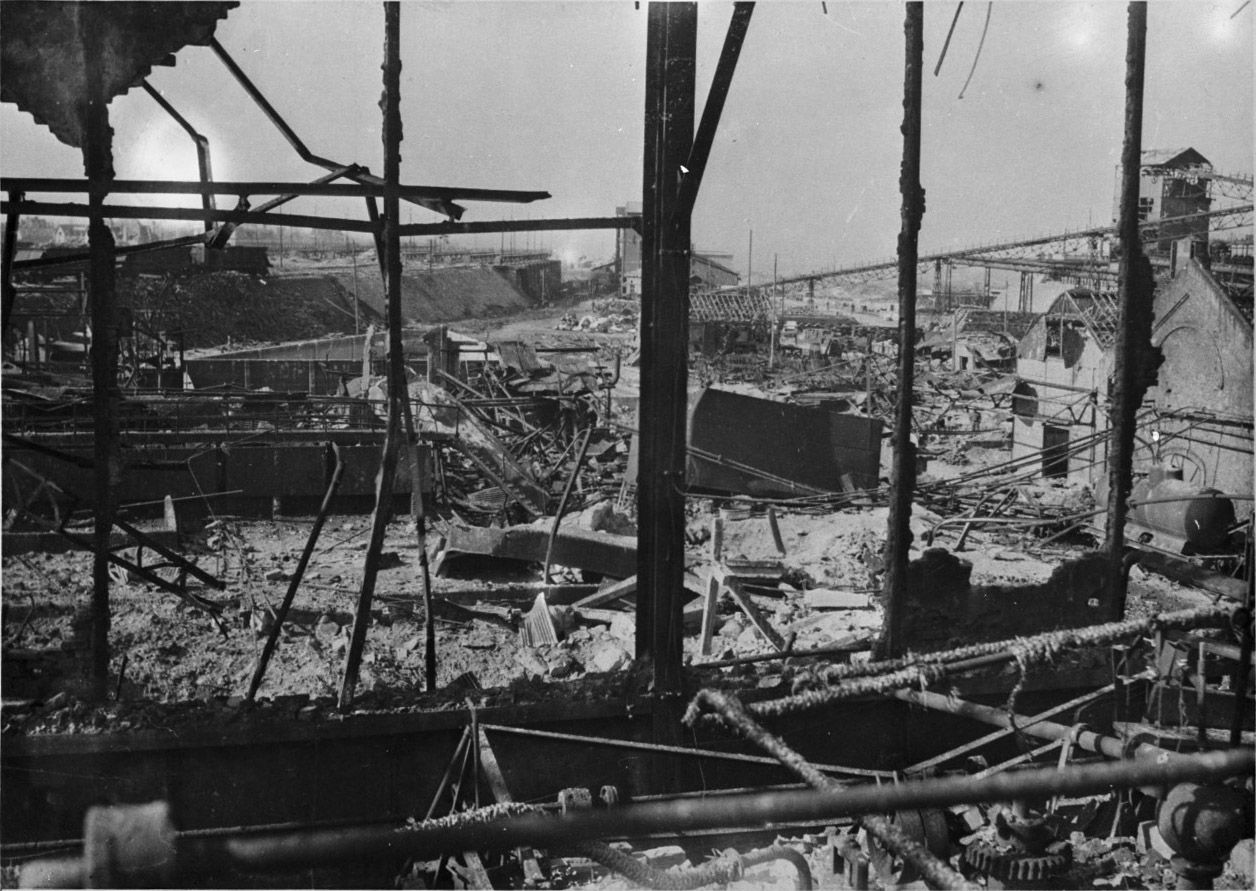
By the spring of 1947, Europe was in catastrophic shape. Two years after the end of the war, cities still lay in ruins. Factories were stripped, in disrepair or equipped with obsolete machinery. Fuel and raw materials were desperately short, and a brutal winter had pushed Britain and much of the continent to the edge. As Under Secretary of State for Economic Affairs William Clayton warned after touring Europe, “Millions of people in the cities are slowly starving.” Governments burned through their foreign currency reserves importing basic necessities, leaving nothing for reconstruction. The entire economic structure of the continent threatened to collapse.
Marshall saw this firsthand. During the Moscow Foreign Ministers Conference in March-April 1947, he spent six weeks in fruitless negotiations with the Soviets over the future of Germany. He came away convinced that Stalin was content to watch Western Europe slide toward economic ruin, expecting the chaos to serve Soviet interests. As historian David Roll argues in his essay for the Library of Congress, the offer of assistance that followed was “actually inspired by economic self-interest and national security” as much as by humanitarian concern.
The night he returned to the United States, Marshall addressed the nation by radio.
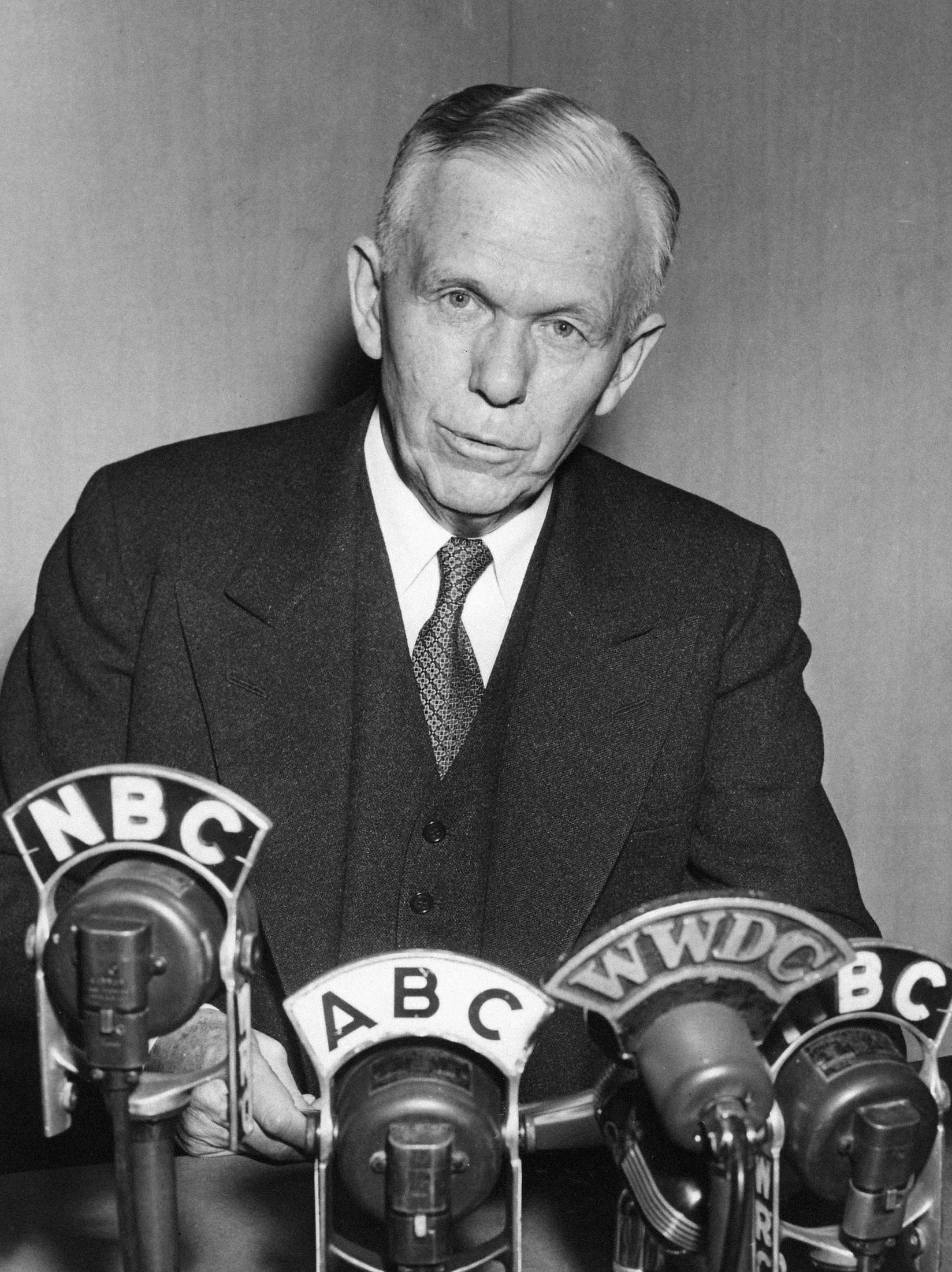
Secretary of State Marshall sits behind a group of microphones at the conclusion of a radio report to the nation on the Moscow Foreign Ministers’ Conference. GCMF photo.
“The patient is sinking while the doctors deliberate.”
George C. Marshall, national radio address
April 28, 1947
George F. Kennan, 1951.
That line captures the urgency that drove everything that followed. Within weeks, Marshall assembled the Policy Planning Staff, a dozen experts from a variety of fields, and gave them two weeks to develop ideas to aid Europe. He told the group’s leader, George F. Kennan, to “avoid trivia.” Kennan took three weeks instead of two but delivered the outline that became the foundation of Marshall’s Harvard address.
Marshall deliberately chose the Harvard commencement to outline the plan. He wanted no reporters treating it as a major speech. He directed the State Department to create a low-key press release. He hoped the first reactions would come from Europe, not from the American press: if domestic politics seized on the proposal before Europeans could respond to it, he worried the whole enterprise would lose traction.
From Speech to Law in 10 Months
Marshall did not arrive at Harvard with a finished plan. He arrived with a framework deliberately vague enough to require European initiative, but specific enough to set that initiative in motion. Five key principles anchored the speech:
-
- European-led, American-funded. The initiative had to come from Europe. The U.S. would not impose a program from the outside.
- Open to all of Europe. Every country could participate, including, in theory, the Soviet Union.
- Time-limited. This would not be an open-ended commitment.
- Infrastructure over relief. Once immediate human needs were met, the focus would shift to rebuilding railroads, factories, and trade networks.
- Mutual trade. All participants had to trade equally with each other.
Behind the scenes, this was a monumental political effort. Congress, controlled by a Republican majority focused on tax cuts and reduced spending, was not eager to fund European recovery. Marshall and Undersecretary Robert Lovett worked the Hill relentlessly. Senator Arthur Vandenberg of Michigan, the Republican chairman of the Foreign Relations Committee, became a crucial ally, working behind the scenes to build bipartisan support.
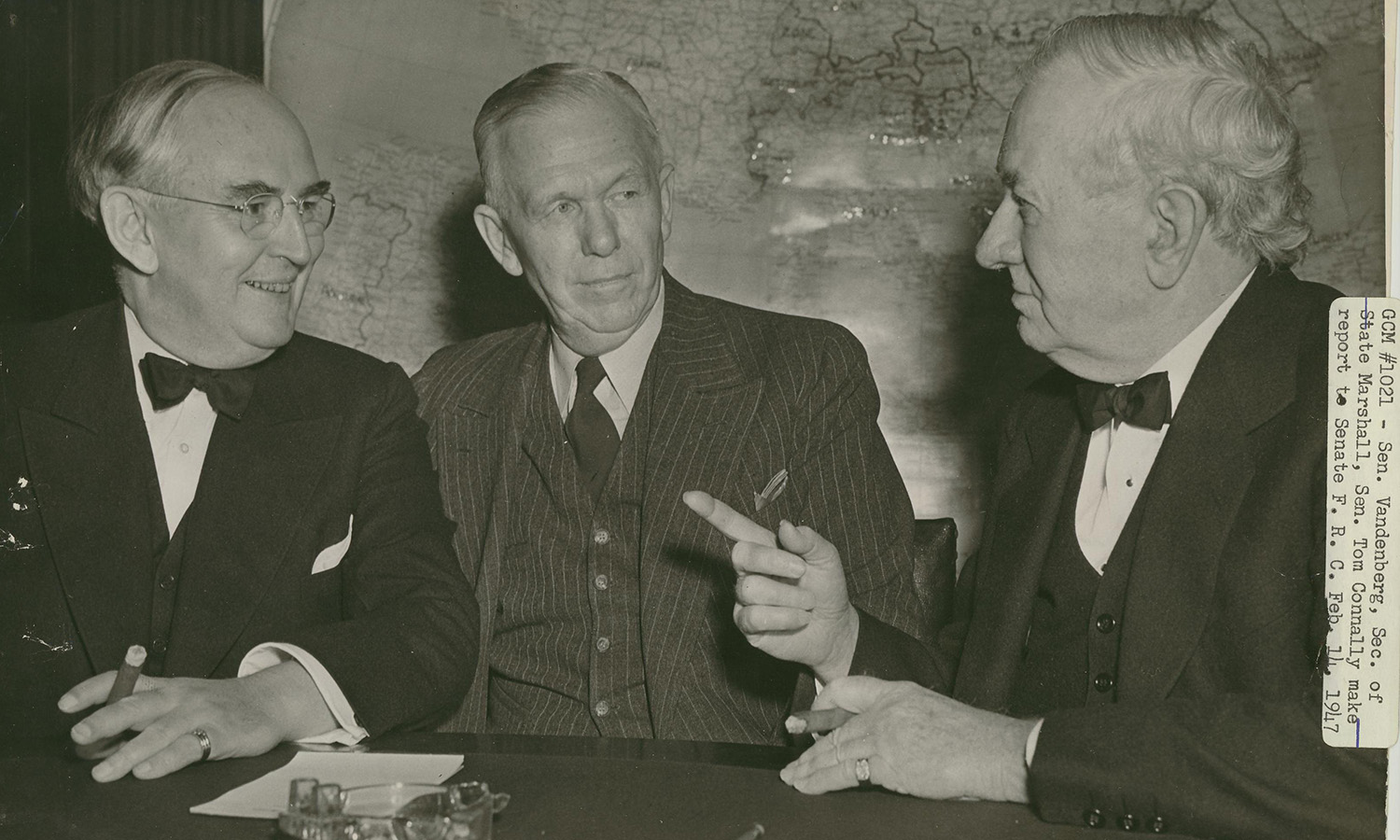
Secretary of State Marshall conferring with Senators Arthur Vandenberg and Thomas Connally, February 14, 1947.
The bill was initially called the “Truman Plan,” but the President himself suggested naming it after Marshall, whose reputation for nonpartisan integrity gave the legislation bipartisan credibility.
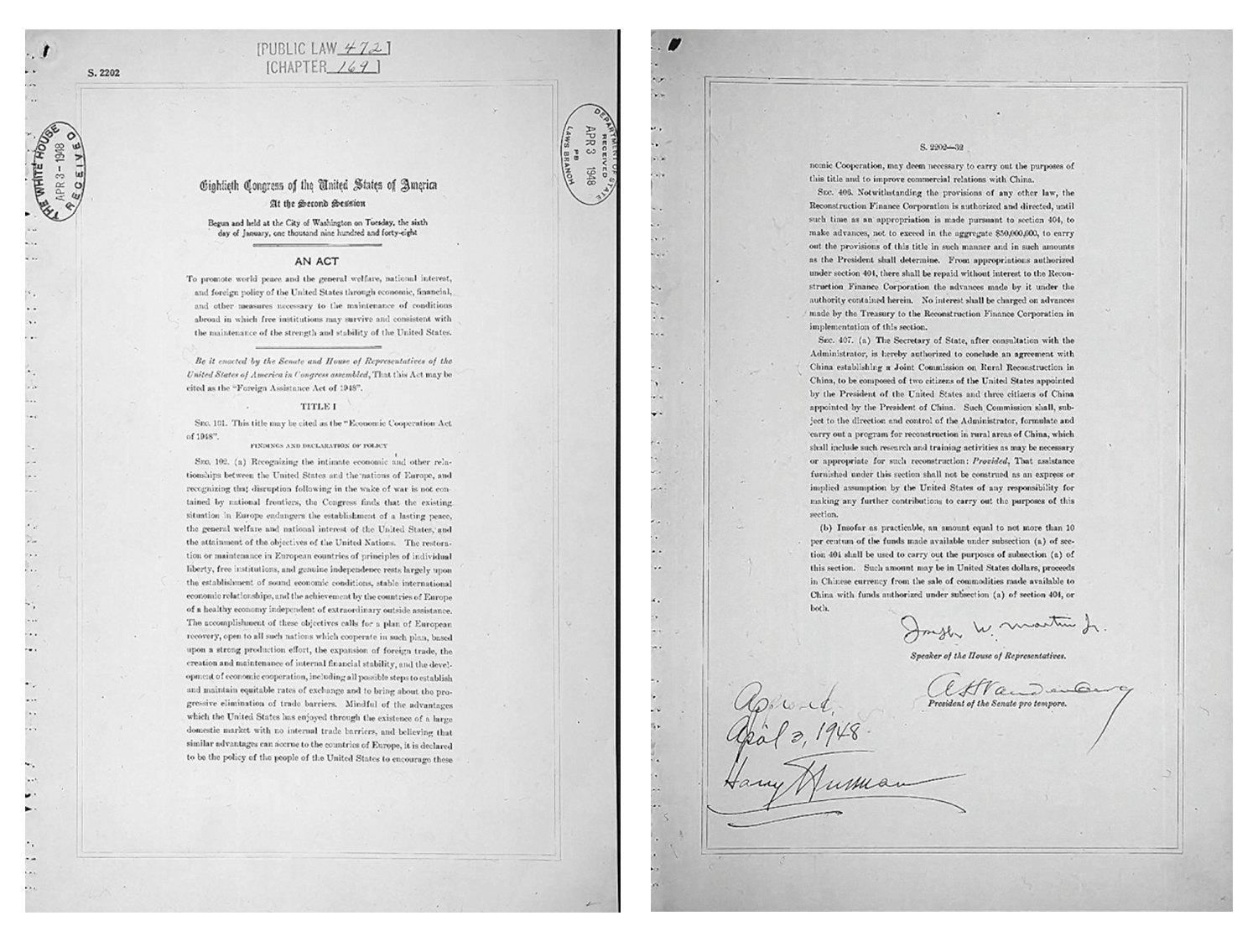
The first and last pages of the Economic Cooperation Act of 1948 the Marshall Plan made law. Click scan for library record. GCMF.
Congressional stats
69-17Senate vote for the Economic Cooperation Act (March 13, 1948) |
329-74House vote (April 2, 1948) |
The Economic Cooperation Act of 1948 was signed by President Truman on April 3, 1948, barely ten months after Marshall’s speech. It was a herculean effort, and it saved Western Europe.
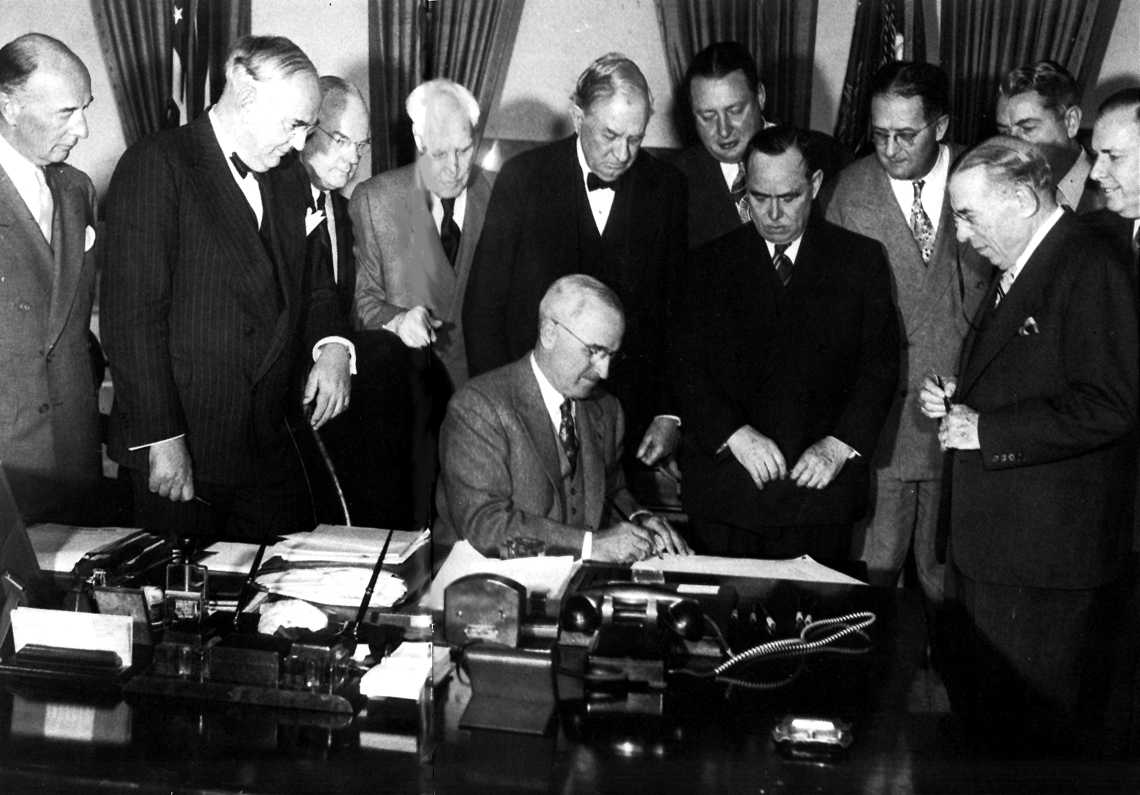
Signing of the Economic Cooperation Act (the “Marshall Plan”). GCMF photo.
What it Accomplished
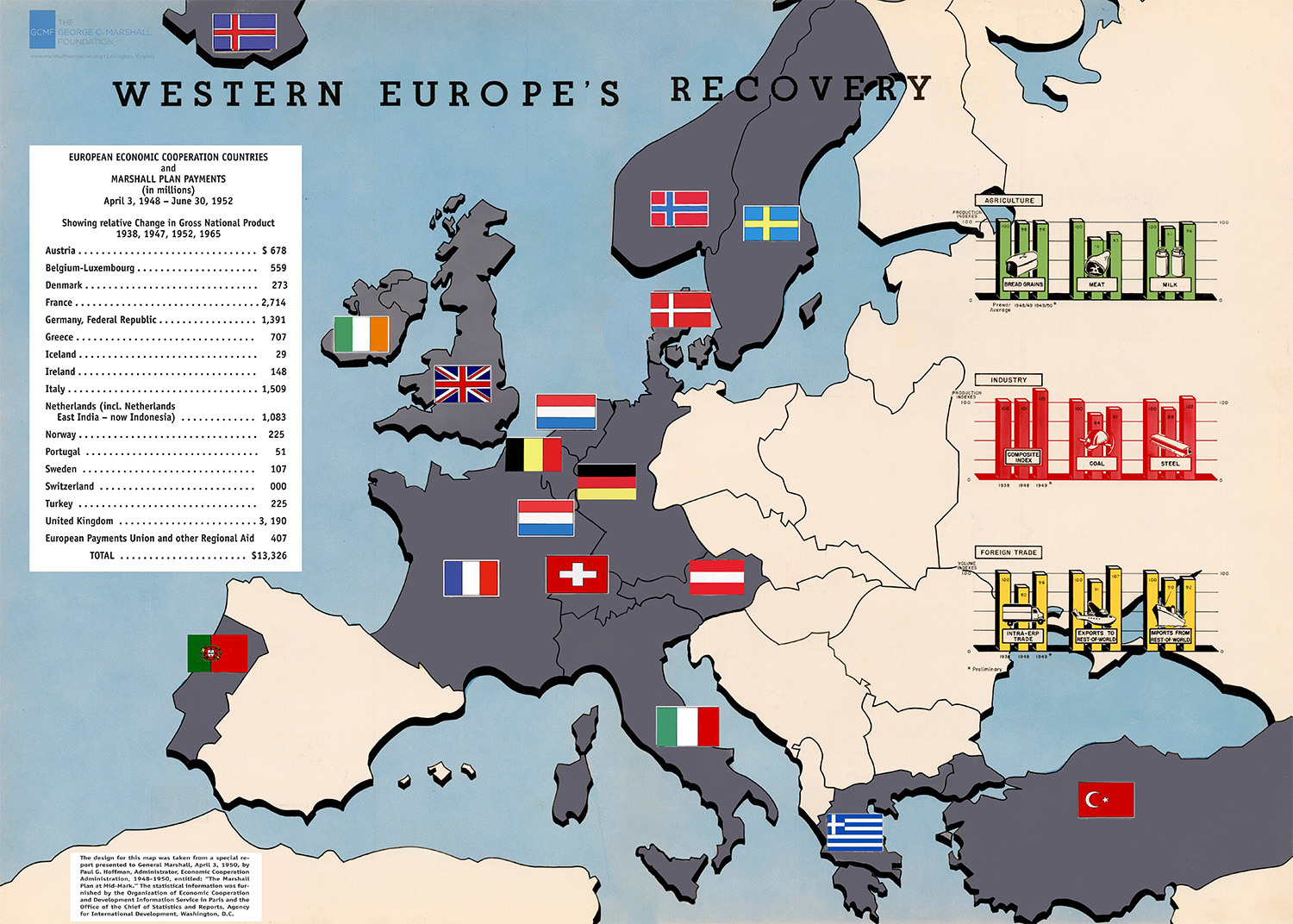
Marshall Plan aid distributed to participating countries, 1948-1952. George C. Marshall Foundation Library. Restored by Glen J. Carpenter. For a high resolution JPEG or TIFF, contact [email protected]. Otherwise, share, distribute, and reproduce! Map: Marshall Plan Payments in Millions © 2025 by George C. Marshall Foundation is licensed under CC BY-ND 4.0.
Overview
$13.3 billion in total aid, 1948–1952 (~$150–170 billion in today’s dollars)
~5% of U.S. GDP committed to European recovery
17 countries participated in the program
3.5 years of operation, ending six months ahead of schedule
16.8 million private relief packages shipped from Americans to Europe
$50 million directed to tuberculosis medicine alone
Results
35% increase in Western European industrial production by 1952
The Ford Motor Company in Britain received funds to replace machine tools needed to produce cars, trucks, and tractors for export
Agricultural production reached pre-war levels by 1949, just one year in
3,000+ Europeans completed six-month technical exchanges at U.S. industries and farms
Where the Money Went
United Kingdom: 24% ($3.2B)
France: 20.4% ($2.7B)
Italy: 11.4% ($1.5B)
West Germany: 10.5% ($1.4B)
Netherlands: 8.1% ($1.1B)
Greece: 5.3%
Austria: 5.1%
Belgium & Luxembourg: 4.2%
Denmark: 2.0%
Norway: 1.7%
Turkey: 1.7%
Ireland: 1.1%
Sweden: 0.8%
Portugal: 0.4%
Iceland: 0.2%
European Payments Union & regional: 3.1%
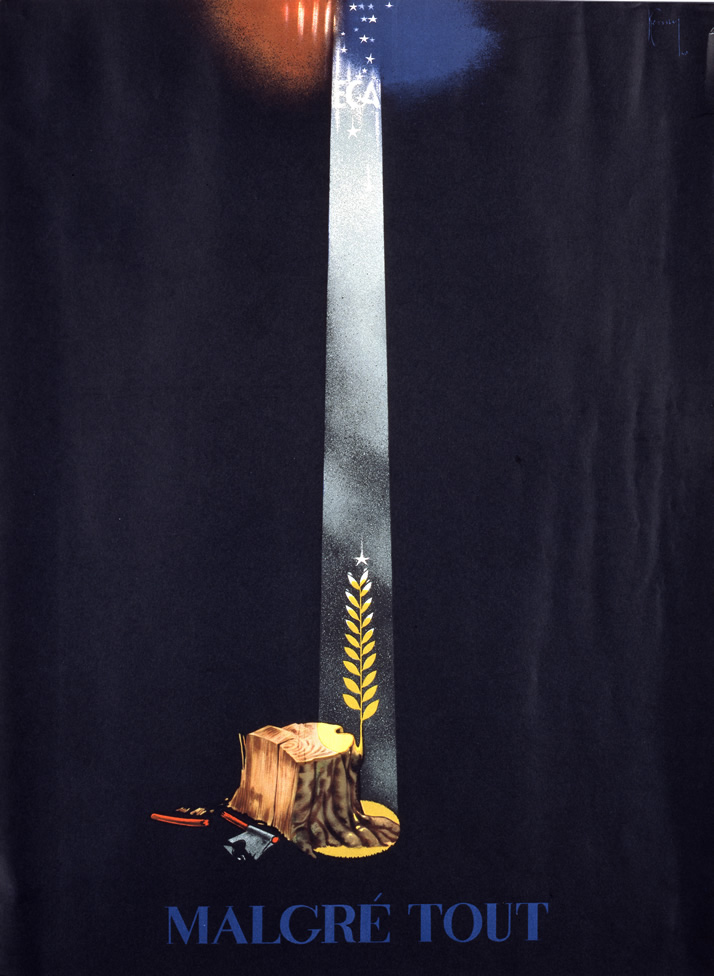
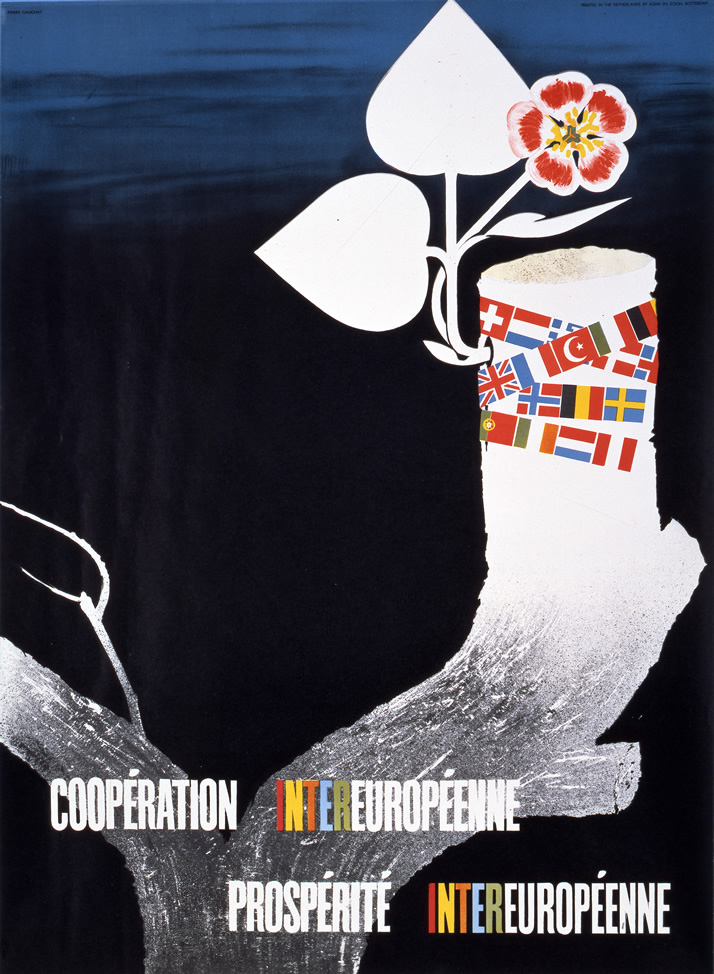
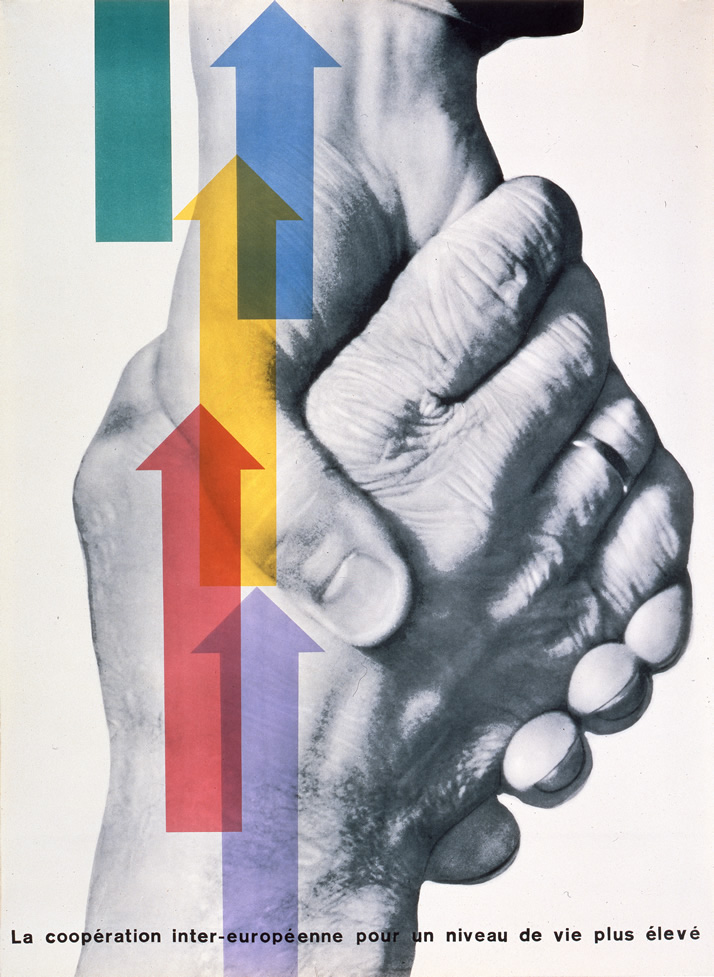
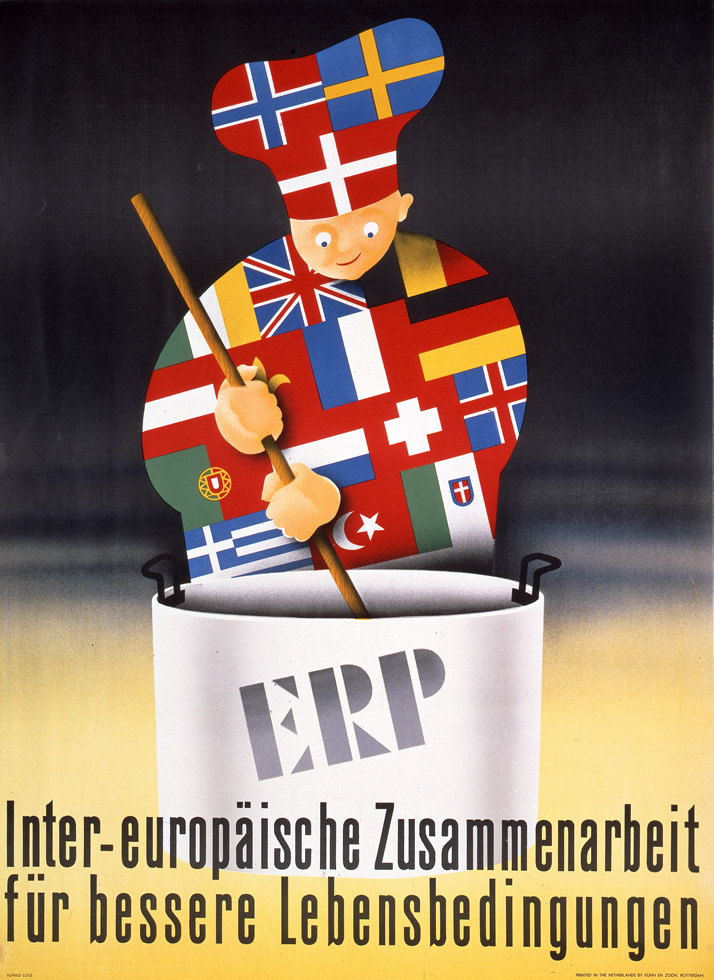
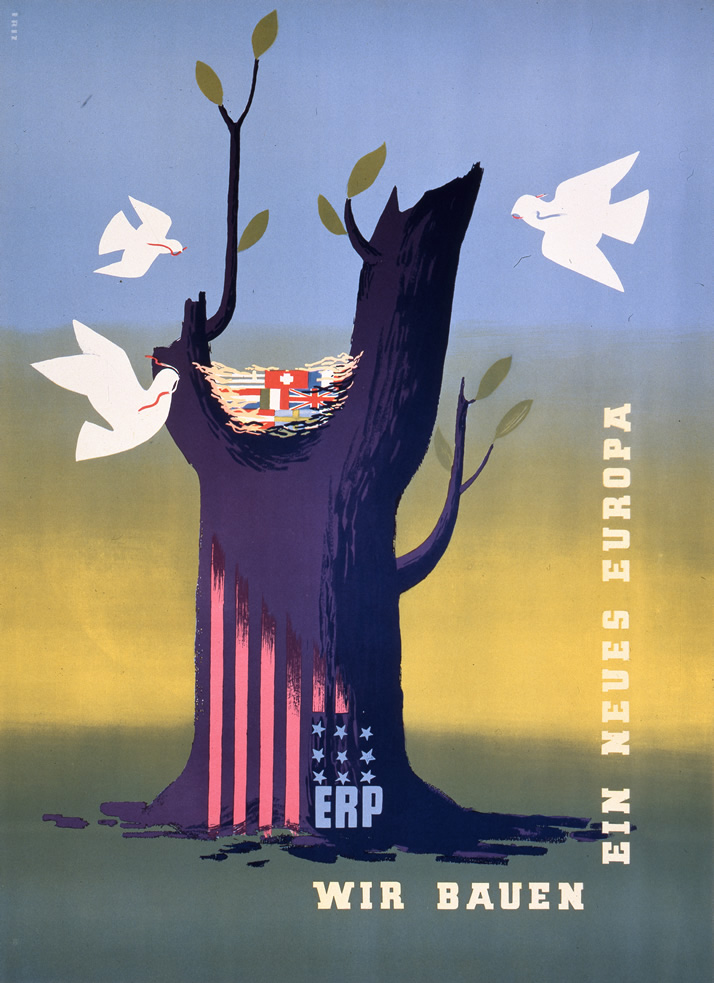
Marshall Plan posters from the 1950 Intra-European Poster Contest
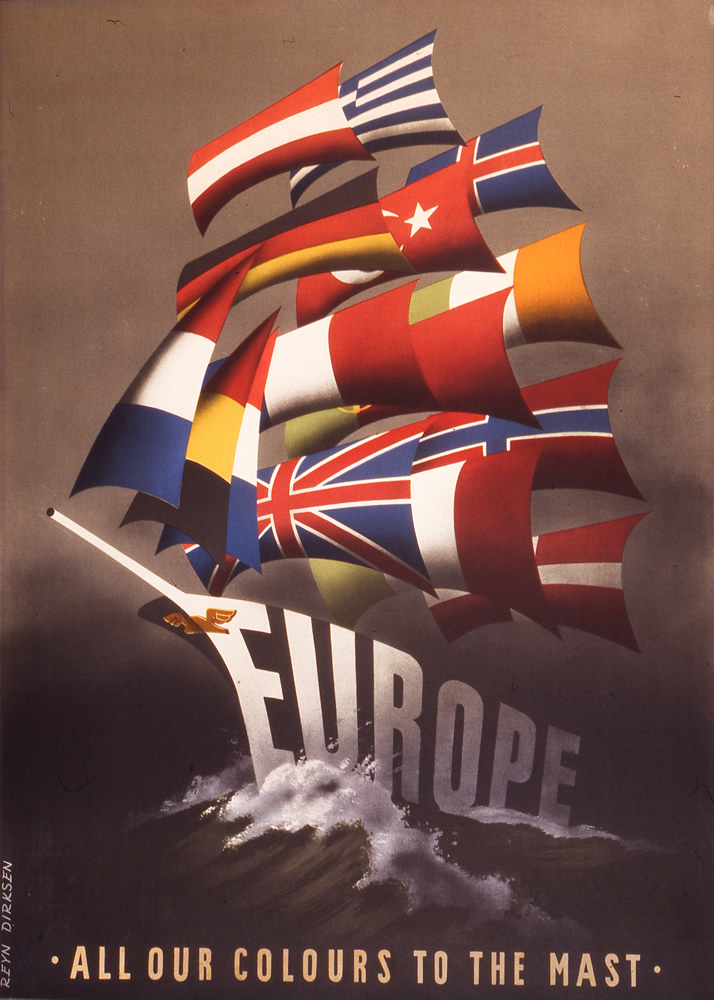
In 1950, the Economic Cooperation Administration held a poster contest across Marshall Plan countries on the theme “Intra-European Cooperation for a Better Standard of Living.” Over 10,000 entries were submitted by artists in thirteen nations. A jury of graphic arts professionals from twelve countries selected twenty-five winners. The first-place poster, All Our Colors to the Mast, by Reijn Dirksen, depicts a single ship with sails made from the flags of every participating country. The Marshall Foundation holds prints of all 25 winners.
The Marshall Plan in Action
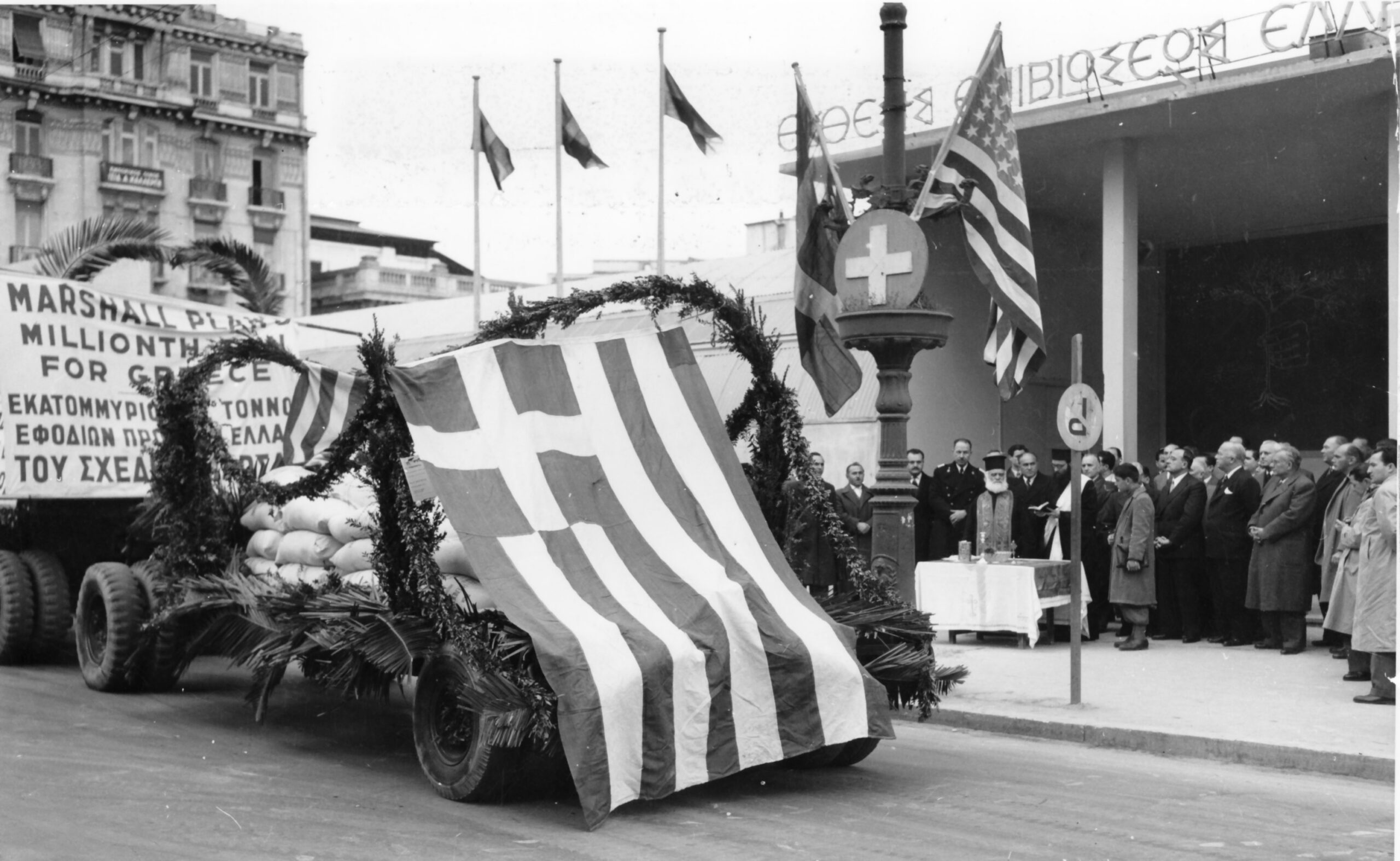
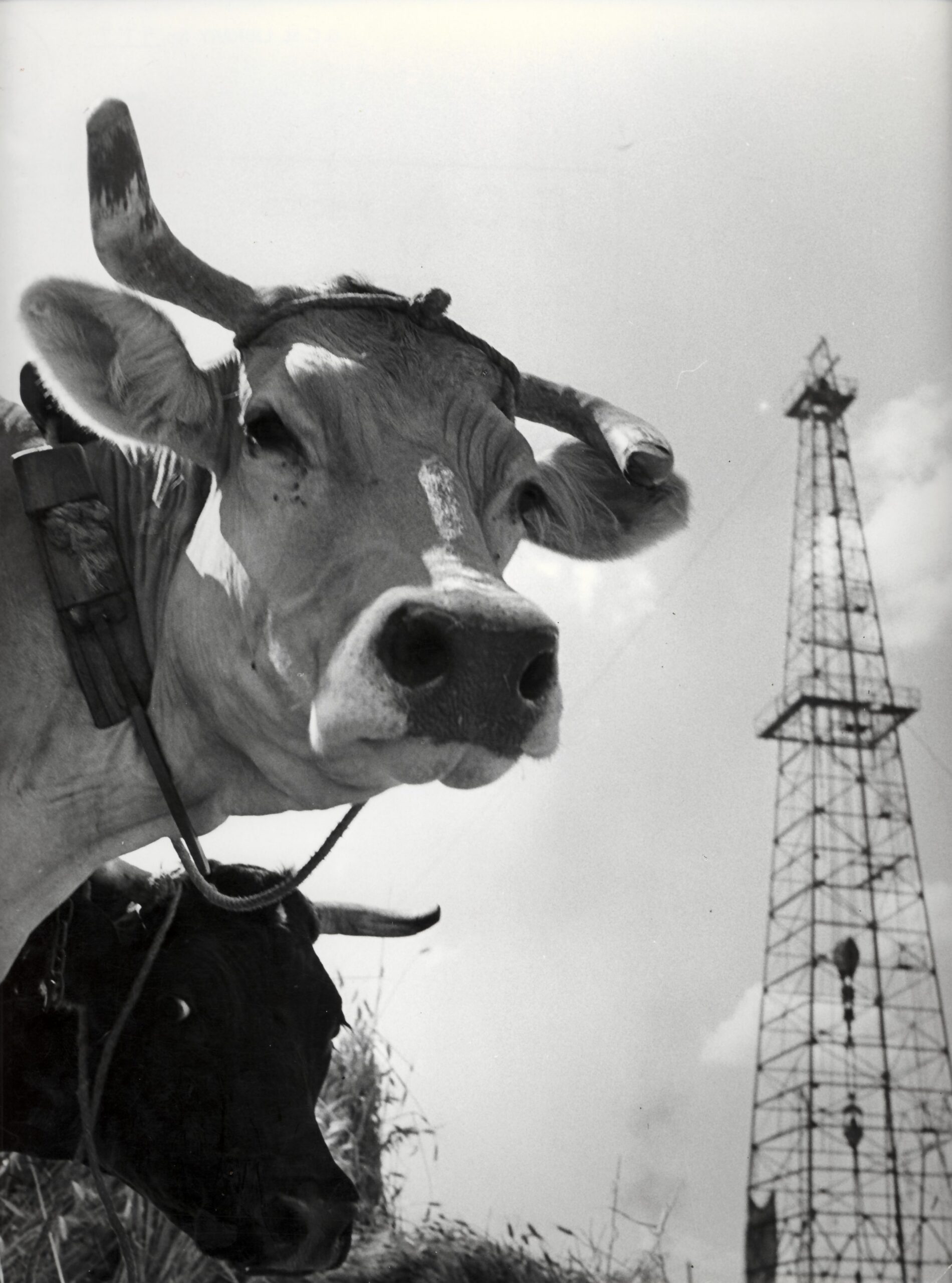
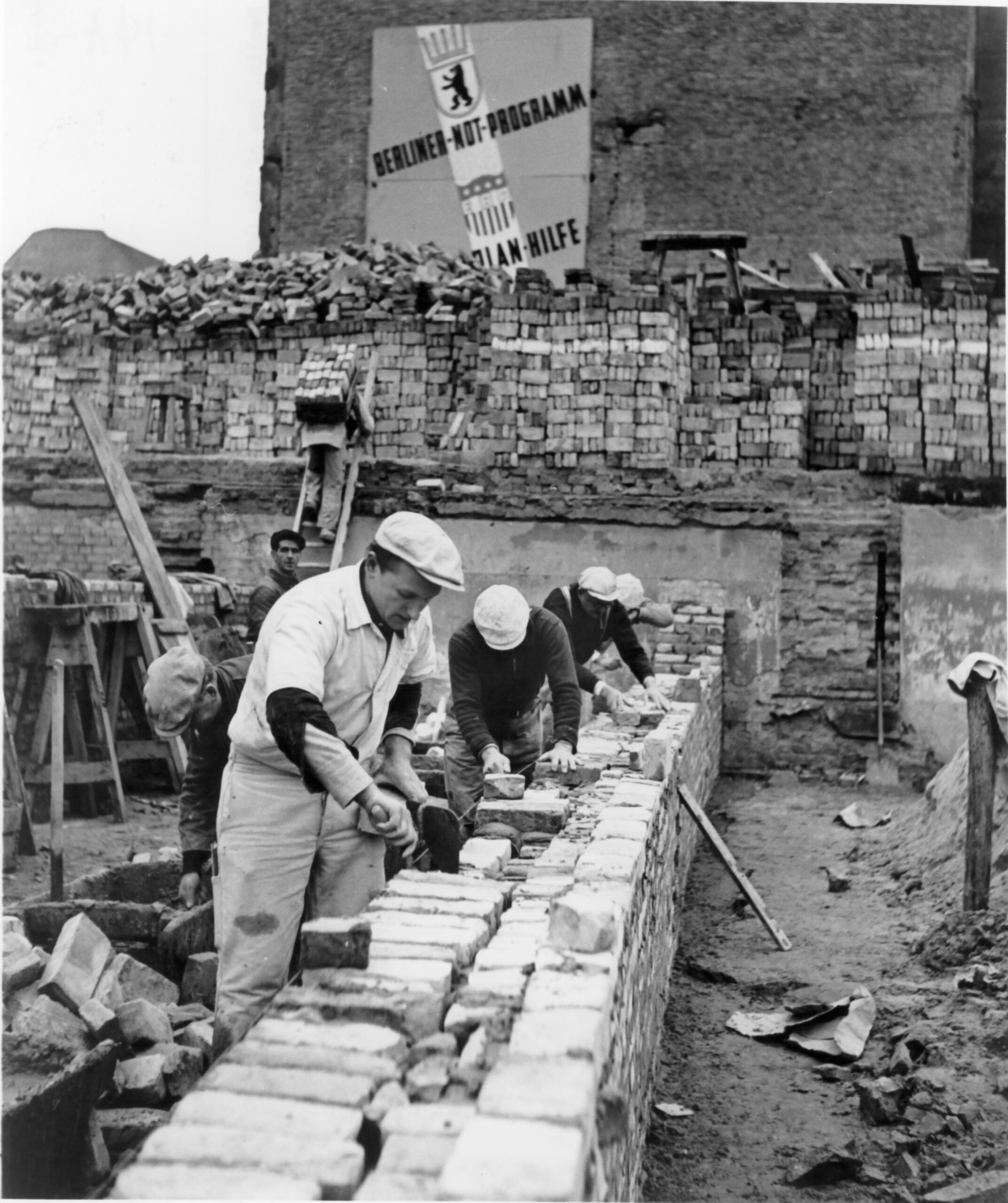
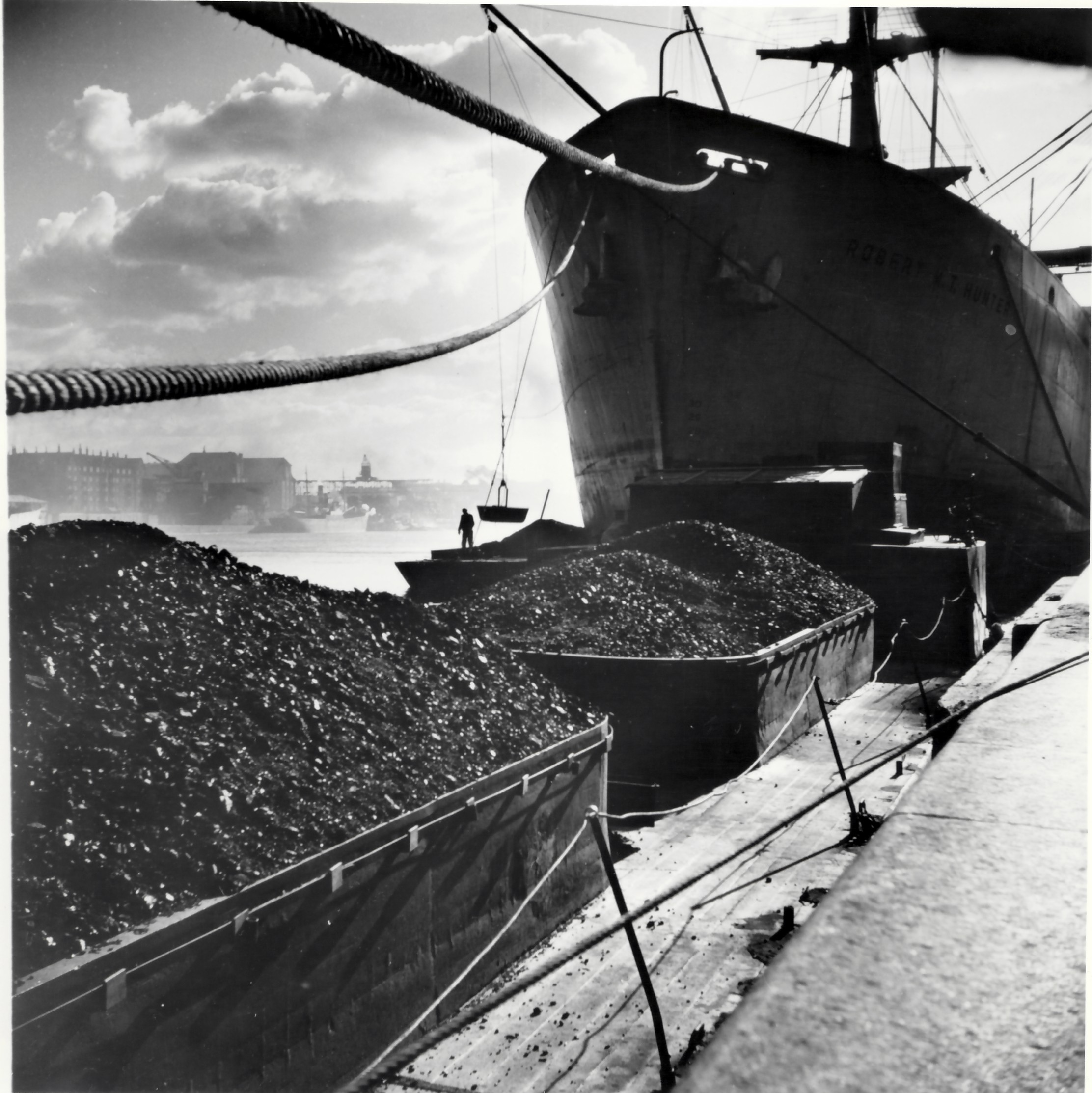
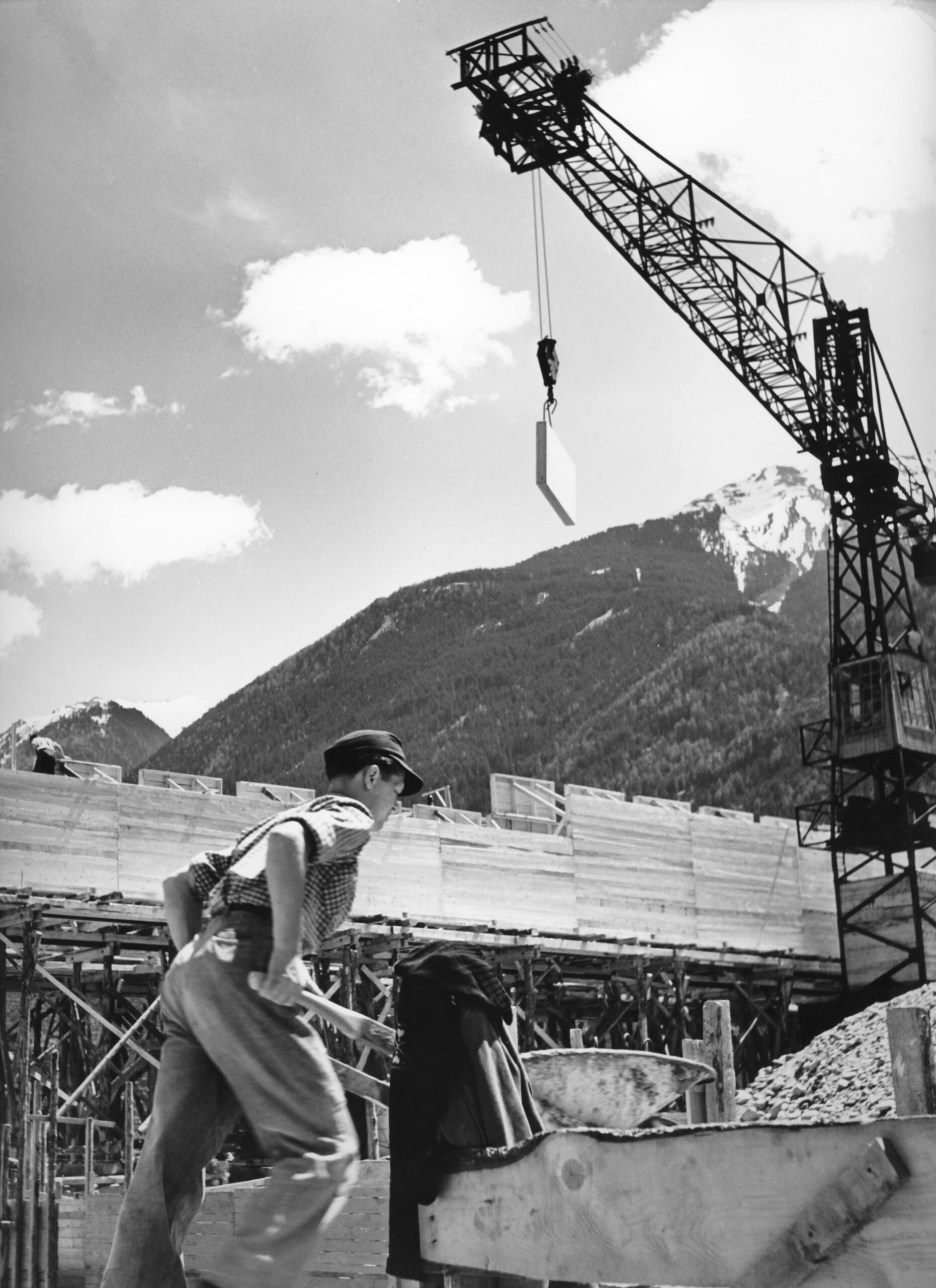
Photographs from the National Archives Marshall Plan collection, also held by the Foundation, document the European Recovery Program as it happened: shipments arriving at port, factories rebuilt, fields planted, infrastructure under construction, the public information campaigns that accompanied the aid, and its results.
The Marshall Plan was not a blank check. It was a complex operational program touching industry, agriculture, medicine, infrastructure, and technical education. Some highlights:
- A $6.5 million grant enabled an alcohol production plant in Scotland, reducing Britain’s need for imports and supporting pharmaceutical and rayon production.
- The construction of a new wharf in North Borneo to help that British colony export rubber.
- ECA money enabled Portugal to purchase key equipment and materials to build a new hospital-tender ship for its cod-fishing fleet.
- The French aircraft industry purchased propellers for new planes in production.
FAQs
-
Q: Was the Marshall Plan purely humanitarian?

A: No, and Marshall never pretended it was. The Plan was driven by a combination of genuine concern for European suffering and clear-eyed American self-interest. As David Roll writes in his Library of Congress analysis, the offer of assistance “was actually inspired by economic self-interest and national security.” Marshall and his advisors understood that a Europe in economic collapse would become a breeding ground for political extremism and a lost market for American goods. In the speech itself, Marshall made this explicit: American policy was directed “not against any country or doctrine but against hunger, poverty, desperation and chaos,” but he also noted that the consequences to the American economy of European collapse “should be apparent to all.” The Plan served humanitarian, strategic, and economic goals simultaneously.
-
Q: Was Marshall Plan aid purely financial?
A: Far from it. While $13.3 billion in funding was the headline figure, the Plan encompassed technical assistance, infrastructure rebuilding, trade reform, and institutional development. Over 3,000 Europeans participated in six-month technical exchange visits to American industries. The Plan funded everything from railroad construction in French North Africa to hospital ships for Portugal’s fishing fleet to machine-tool replacement for British auto factories. Perhaps most importantly, the Plan required participating countries to coordinate their economies, reduce trade barriers, and trade equally with each other, laying the groundwork for what would eventually become the European Union.
-
Q: Was the Marshall Plan offered to the Soviet Union?
A: Yes. Marshall deliberately made the offer open to all European countries, including the Soviet Union. This was a strategic calculation. Marshall and his advisors assumed that Moscow would never accept conditions like economic transparency, open trade, and American oversight. They were right. Soviet Foreign Minister Molotov attended the initial Paris meetings in the summer of 1947 but walked out on July 2, calling the Plan “American economic imperialism.” Countries in the Soviet sphere of influence, some of which had expressed interest in participating, quickly fell into line. One scholarly estimate is that the Soviet Union extracted roughly $14 billion from Eastern Europe between 1948 and 1953, an amount comparable to what the U.S. invested in Western Europe through the Plan.
-
Q: Was the Marshall Plan controversial in the United States?
A: Very much so. After a long and costly war, many in Congress were opposed to spending more money abroad. Republican majorities had been elected in 1946 on a platform of tax cuts and reduced government spending. Opposition came from both isolationist Republicans and some Democrats who resented being presented with another foreign policy commitment. Marshall and Undersecretary Robert Lovett conducted an intensive campaign of congressional outreach. Senator Arthur Vandenberg, the Republican chairman of the Foreign Relations Committee, proved critical. The communist coup in Czechoslovakia in February 1948, which echoed the appeasement failures of the 1930s, helped overcome the last significant congressional resistance.
-
Q: What about Asia and the Pacific?
The Marshall Plan itself was a European program, but the United States also operated a much broader postwar aid system in Asia and the Pacific through occupation relief to Japan, rehabilitation programs in the Philippines, aid appropriations for China and Korea, Southeast Asian technical and economic missions, and selected projects in places such as North Borneo, Sarawak, and Malaya.
For more information, visit the U.S. Department of State’s “Statistical Survey of United States Government Postwar Foreign Aid,” along with related Office of the Historian documents on Japan, the Philippines, and Southeast Asia.
From Our Archive
The Marshall Foundation's research library holds one of the most comprehensive collections of Marshall Plan materials in existence, and is currently digitizing every document in the Marshall Papers.


Further reading
Benn Steil, The Marshall Plan: Dawn of the Cold War (Simon & Schuster, 2018). The definitive history.
Barry Machado, In Search of a Usable Past (George C. Marshall Foundation, 2007). Chapters also available individually: Selling, Analyzing, Implementing, “An Unusable Marshall Plan?”
The Marshall Plan: A Retrospective, edited by Stanley Hoffmann and Charles Maier. Includes contributions from Averell Harriman, Milton Katz, and Charles Kindleberger.
Ferald J. Bryan, George C. Marshall at Harvard: Origins and Construction of the Speech. Analysis of the speech’s drafting process.
State Department handout of Marshall’s remarks, June 4, 1947. Distributed one day before delivery.
Harry Bayard Price, The Marshall Plan and Its Meaning (Cornell University Press, 1955). The official history of the program, 445 pages. Under copyright.
More from the George C. Marshall Foundation
Marshall Plan in Pictures
Marshall Plan Poster Contest
All Marshall Plan Posts