
All around us are the signs of the 250th anniversary of the founding of the United States. It is, of course, an occasion for fireworks and parades. But it should also be an opportunity for reflection on the civic virtue that has undergirded our nation since its birth. You may very well see the comparisons of George Washington and the great defender of the Roman Republic, Lucius Quinctius Cincinnatus. But on July 4th and afterwards, I would ask that you also give some thought to the role played more than a century later by another George, who himself was compared to Cincinnatus. No less a figure than Winston Churchill alluded to the linkage between George C. Marshall and Cincinnatus when he called the former “the noblest Roman of them all.” Like his ancient counterpart, Marshall sought no great glory after serving his country. And like Cincinnatus, he answered the call after he had set down mighty burdens for a well-deserved retirement.
George C. Marshall was not present at the creation of the republic, but he was there when his country needed him most. And like George Washington he not only accomplished great things for the United States, but he also did so out in the true spirit of civic virtue—committed to humility, respect, and integrity.
— Dr. Paul Levengood, President, George C. Marshall Foundation
Washington, Marshall, and the Republican Soldier
In the American tradition, the Cincinnatus ideal runs most powerfully through George Washington Marshall’s contemporaries repeatedly reached for Washington when trying to describe his character, restraint, and public service.
Douglas S. Freeman, the biographer of George Washington, used Jefferson’s words about Washington to describe Marshall after Time named him “Man of the Year.”
“Said Jefferson of the commander of the Revolution: ‘…His integrity was most pure, his justice the most inflexible I have ever known…’ That is George Marshall—that and much besides.”
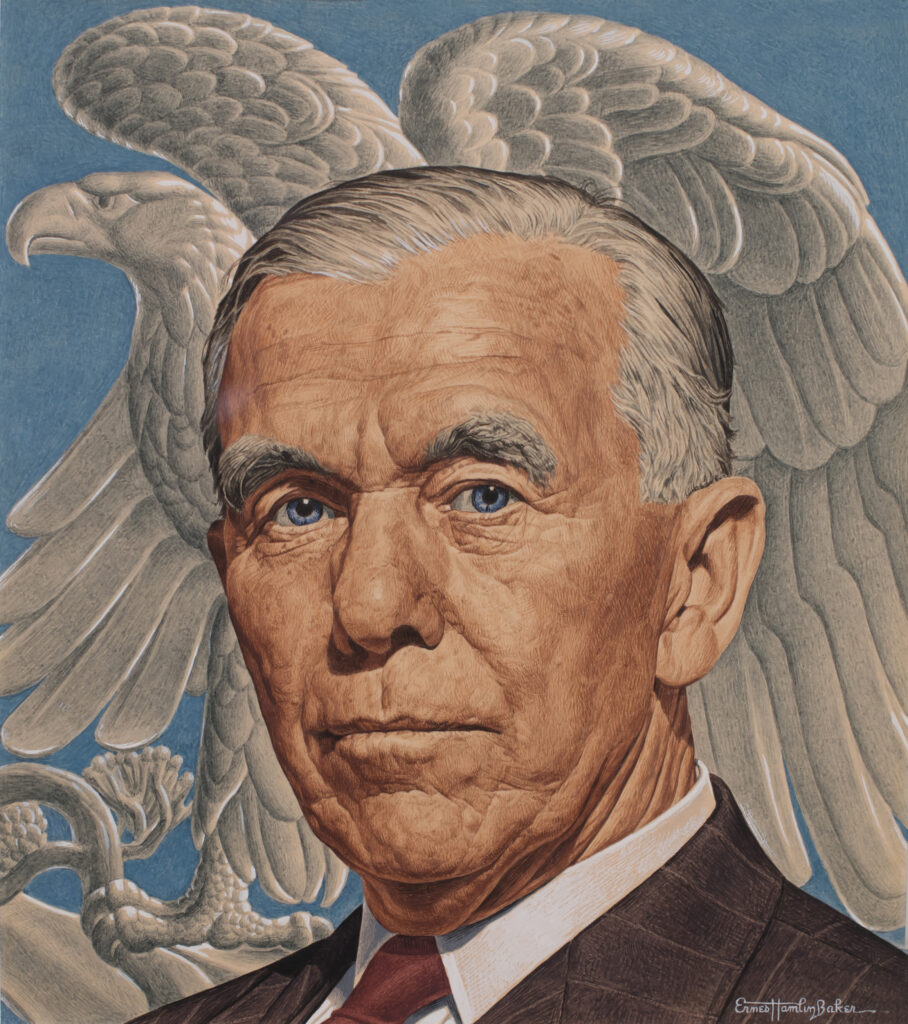
Watercolor portrait by Ernest Hamlin Baker for January 5, 1948, “Man of the Year” cover of Time. It was Marshall’s sixth appearance on the cover and his second as “Man of the Year.”
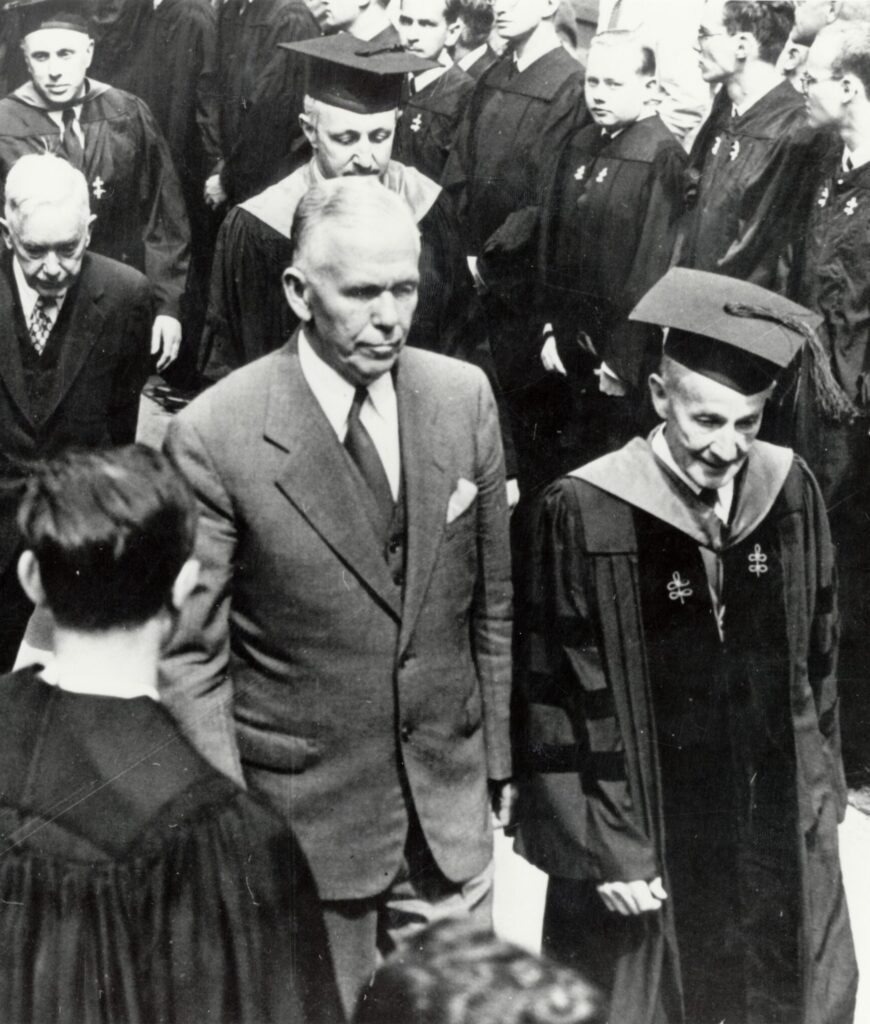
Harvard President James B. Conant read this citation before Marshall delivered the 1947 Harvard speech that became associated with the Marshall Plan:
“An American to whom Freedom owes an enduring debt of gratitude, a soldier and statesman whose ability and character brook only one comparison [George Washington] in the history of the nation.”
Secretary of State Marshall in procession to receive honorary L. L. D. at Harvard University, June 5, 1947.
To understand why Marshall’s contemporaries so often reached for Washington as the comparison, see Don Higginbotham’s essay:
Marshall did not treat Washington merely as a flattering comparison. During his mission to China after World War II, he invoked Washington as a warning about military dictatorship and the danger of losing republican legitimacy. Marshall, quoted here by Forrest Pogue, warned Chiang Kai-shek against relying on military dictatorship to unify China. Washington represented a standard Chiang could lose: the founding leader who serves the nation rather than ruling it by force.
“He warned that there would be an ‘inevitable comparison of this procedure with that of the prewar army dictatorship in Japan which led to the destruction of that nation.’ In later years, Marshall recalled telling Chiang that at present his people looked on him as their George Washington but one day they might change their opinions.”

Civilian Control of the Military
Marshall understood civilian control as a daily discipline. The military could The military could advise, warn, prepare, and execute. It could not claim the right to make political decisions on its own. He believed civilian leaders had to make the ultimate political decisions because the consequences of military action reached far beyond the battlefield.
“I do not think the military authorities should make any political decisions unless they are instructed accordingly, because the effects are too wide-reaching… I tried to keep before [FDR] all the time the casualty results, because you get hardened to these things and you have to be very careful to keep them always in the forefront of your mind.”
Before Pearl Harbor, some of Marshall’s own staff warned him to publicly challenge the Roosevelt administration over military preparedness. Marshall refused to break publicly with civilian authority, believing that trust from the administration and Congress was essential to building the army.
“I had too much imagination around me. Members of the staff were terribly concerned and they spent their time trying to force me to take open action contrary to the administration, which I declined to do. And in the end that paid, because all through I had the backing of the administration…”
General Marshall with Chiefs of the War Department in March 1942: LTG Henry H. Arnold (seated left) and LTG Lesley J. McNair (seated right) with MG Joseph T. McNarney (standing left) and MG Brehon Somervell.
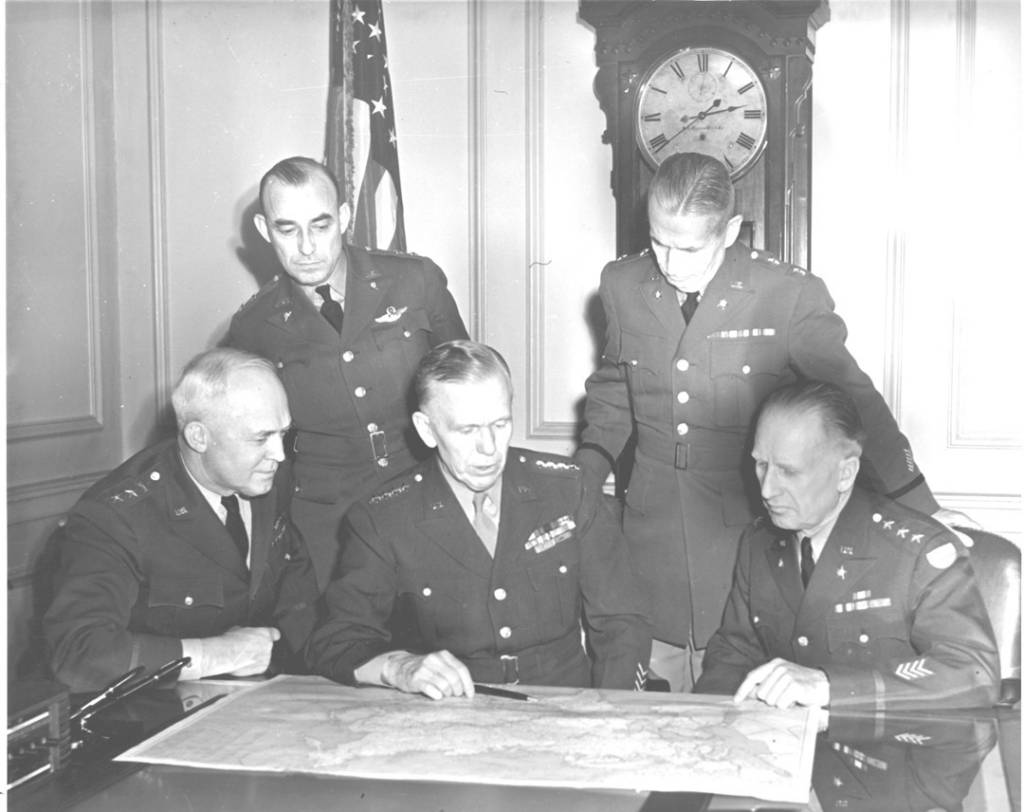
Marshall was responsible for the difficult effort to build and sustain the Army before U.S. entry into World War II. In a democracy, he understood that the Army could not simply demand power: it had to persuade Congress and the public.
“If I had ignored public opinion, if I had ignored the reaction of Congress, we would literally have gotten nowhere… I was trying to get the Congress to do it. I was trying to get the public to do it.”
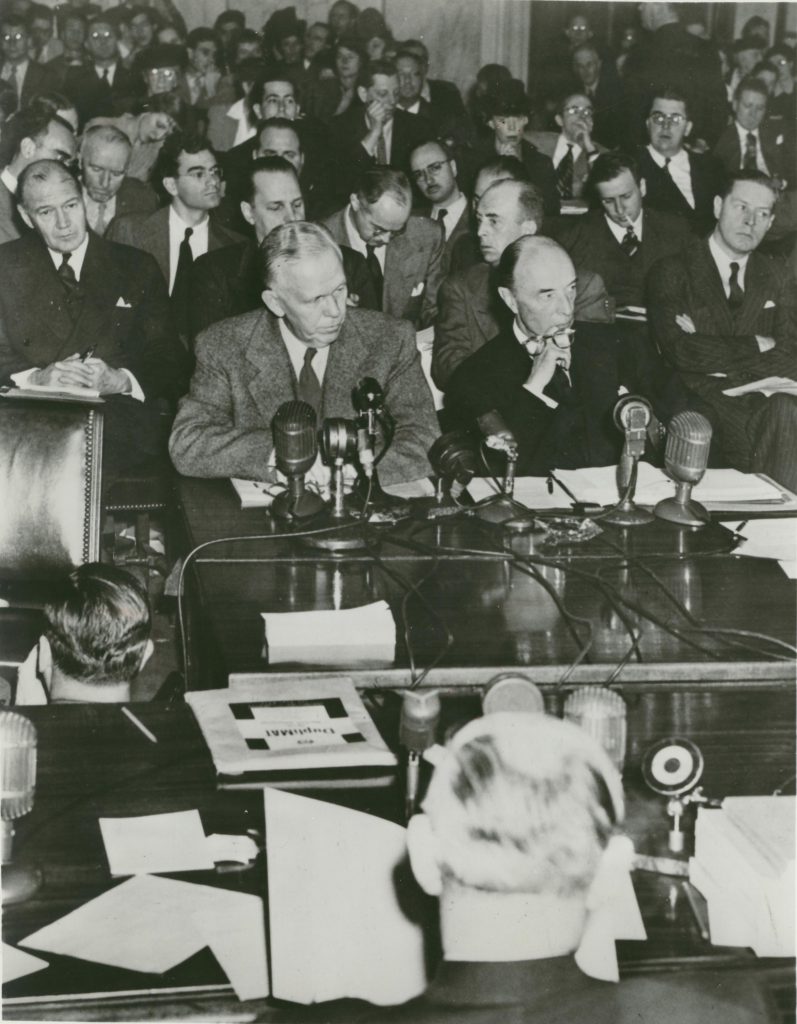
Secretary of State George Marshall, flanked by Undersecretary of State Robert Lovett appear before U.S congressional committee to explain need for European aid, November 11, 1947.
Civilian Control in Practice
Marshall even thought about the appearance of military power in Washington. He knew that uniforms, offices, money, and public anxiety all mattered in a republic suspicious of standing armies.
During the prewar buildup, Marshall wanted to avoid making Washington look militarized while he was asking Congress for massive defense funding. The point was visual as well as constitutional: he did not want the Army to appear to be taking over the capital.
“I was in favor of remaining in civilian clothes at the War Department and the big city headquarters as long as possible, though I was much opposed in every way. But I know how quickly the worm turns on this. While I was asking for large forces and asking for billions, I didn’t want a lot of uniforms plastered around Washington.”
Institutions, Credibility and Democracy
Marshall’s refusal of self-promotion was not just personal modesty. It protected his credibility before Congress, the President, the Army, and the public. Marshall explained to Pogue why he resisted higher rank during World War II. His concern was that personal advancement would weaken his ability to speak honestly and credibly when asking Congress for what the Army needed:
“I didn’t want any promotion at all. I didn’t need it. The chiefs of staff on the British side were already field marshals… I didn’t think I needed that rank and I didn’t want to be beholden to Congress for any rank or anything of that kind. I wanted to be able to go in there with my skirts clean and with no personal ambitions concerned in it in any way…”
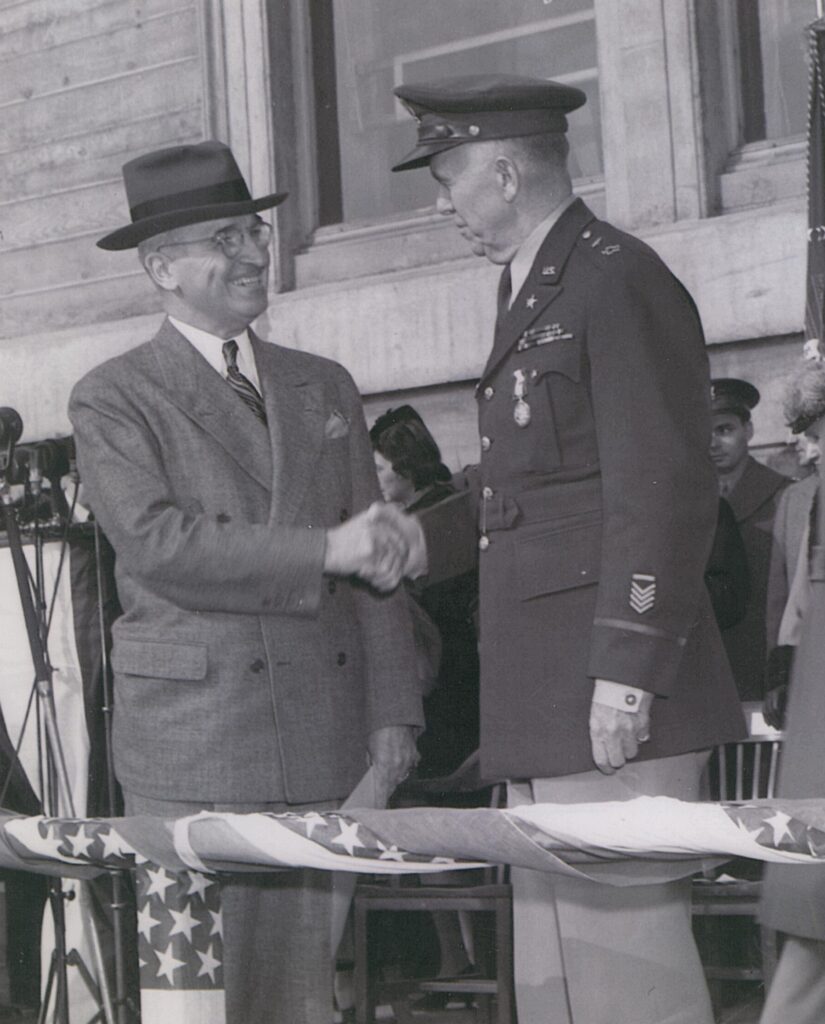
Gen. George C. Marshall receives an oak leaf cluster from Pres. Harry S. Truman, Distinguished Service Medal, Nov. 26, 1945
Marshall recalled refusing honors, degrees, and decorations during the war. He believed accepting such honors while soldiers were fighting and dying would be unseemly and useless to the larger mission:
“I depended on [Frank McCarthy] to stop these things, too. It got you nowhere. I think I declined twenty or thirty [honorary degrees]. I haven’t got any from Norway, Sweden, Holland, or Belgium… I wouldn’t do it.”
Marshall did not pretend democracy was fast, tidy, or naturally prepared for war. He believed its strength depended on whether free institutions could organize themselves before it was too late.
“A democracy has a very hard time in a war, particularly at the start of a war. They can never get ready in advance… Of course, in the end, if the democracy is a firm democracy, it builds up a power which outlasts the other and the dictatorship bogs down.”
Marshall understood congressional criticism and public scrutiny as part of the democratic system. He did not bypass those pressures; he worked through them.
“Questions of this sort-criticism of tanks, planes, other equipment-are very common, certainly to an army of democracy… If they are hostile to you, they can make it very difficult for you. I was very fortunate in having quite a friendly Congress. I had to labor with them.”
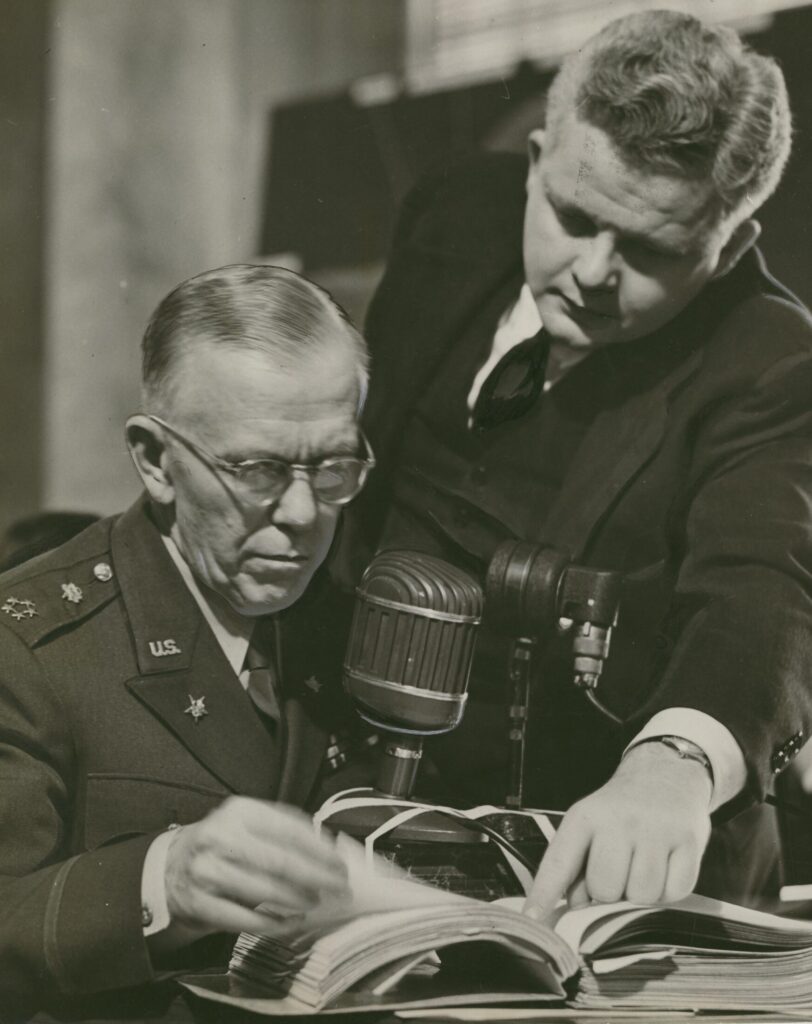
Gen. Marshall and Gerhard Gesel, Joint Pearl Harbor Congressional Committee, Dec. 1945
Organizing Victory
Marshall’s civic virtue was administrative as well as personal. His work mattered because citizen-soldiers paid the price when institutions failed. Responding to critics who accused him of over-ordering supplies, he took satisfaction in the fact that, for once, American troops in the field had more than enough instead of suffering from neglect or shortage:
“That was the first time I knew of in American history that American troops in the field had too much of anything. I was very, very happy that I was responsible. They shut up and didn’t make any more criticisms.”
Marshall valued disagreement from capable subordinates. He built a staff that could argue honestly, test assumptions, and still serve the final decision:
“I thought at the end of the war that I had about the best staff that ever was created, and yet in these major things none of them agreed with me. But that didn’t mean they weren’t about as fine a staff as you could get.”
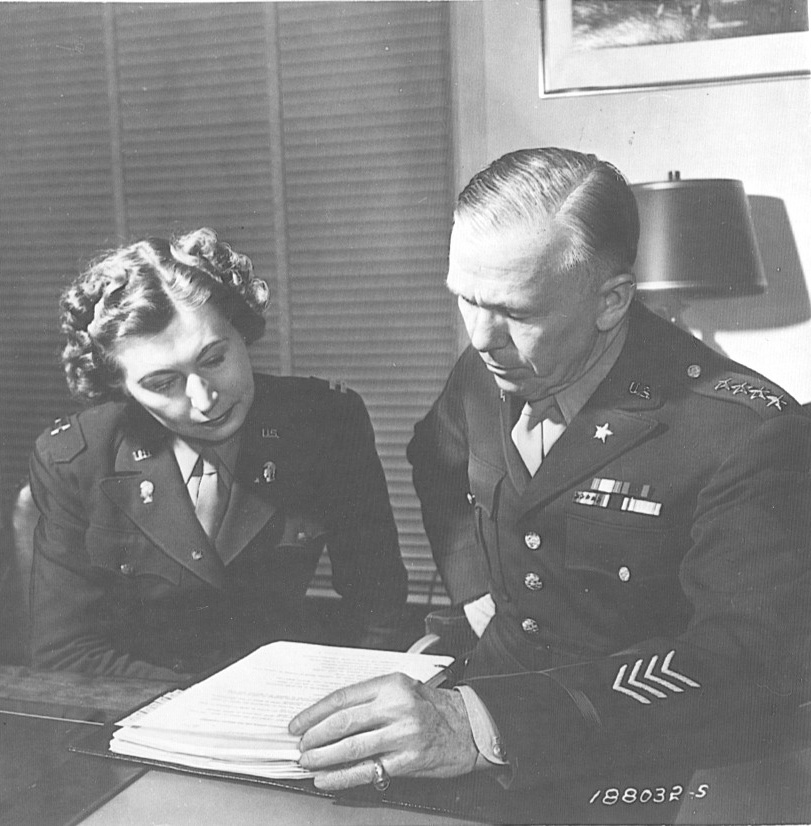
General Marshall with Lt. Col. Florence Newsome, the only woman on the General Staff.
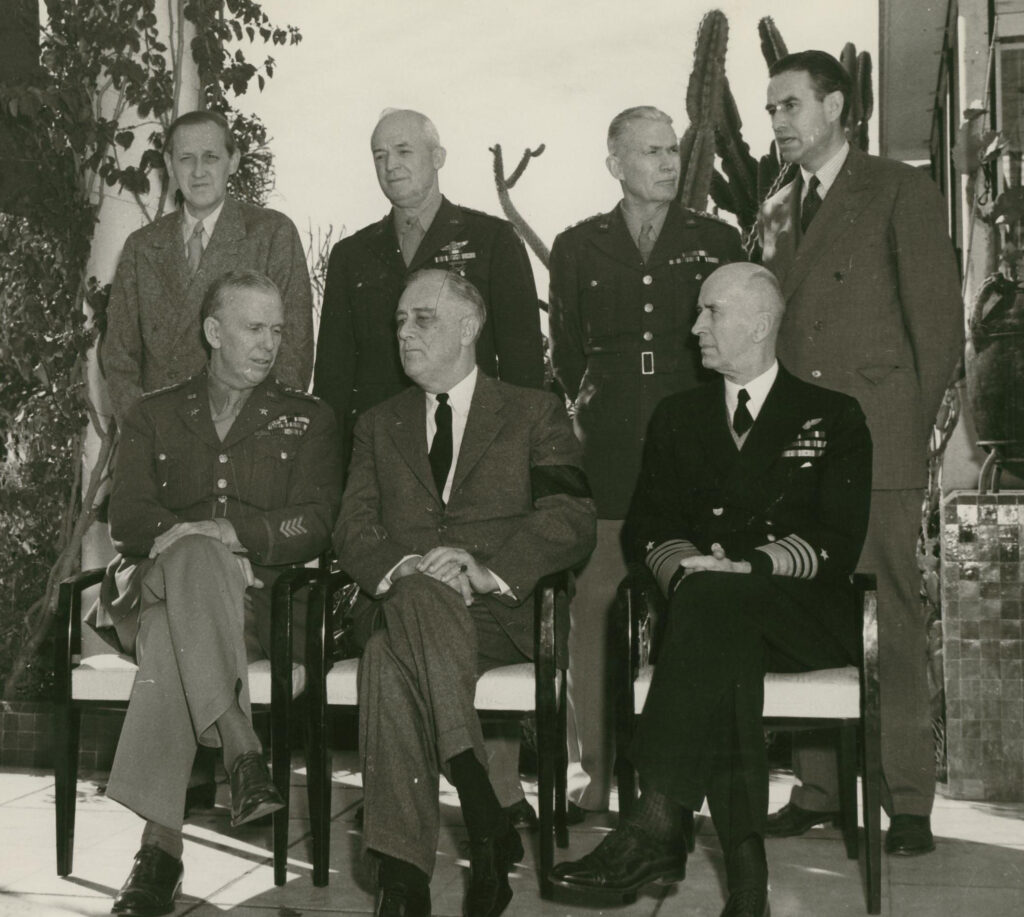
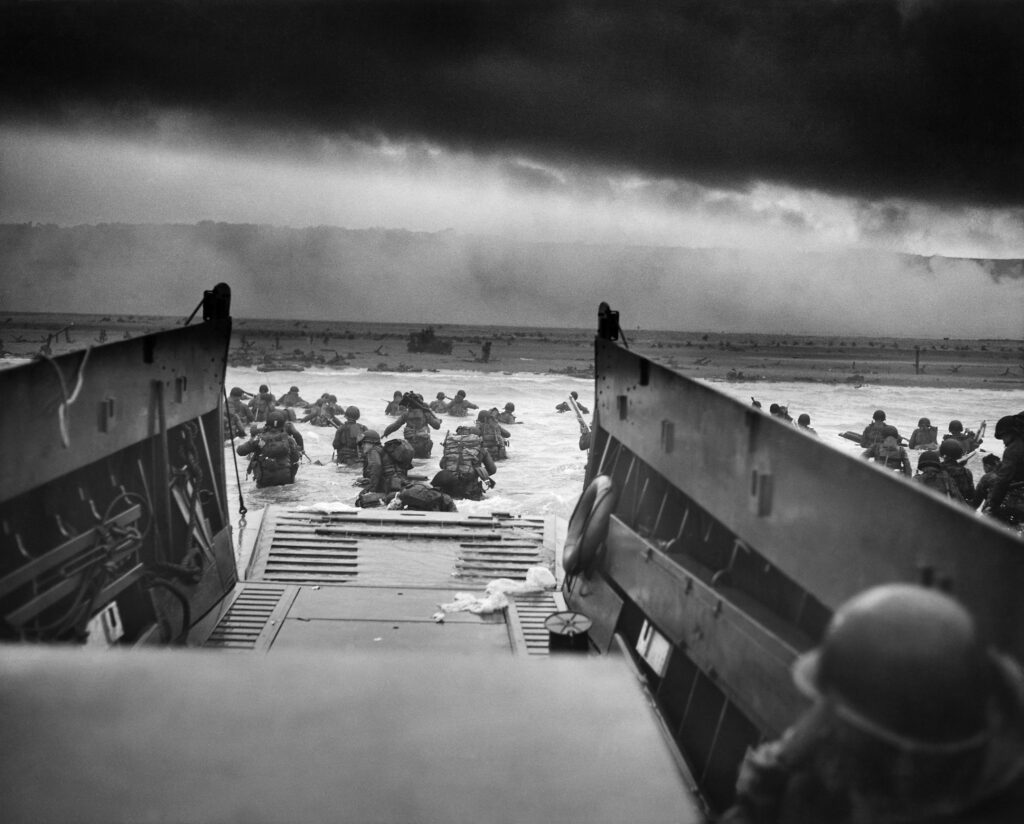
After months of debate over who would command the D-Day invasion, President Franklin D. Roosevelt asked Marshall what he personally wanted to do. Marshall refused to ask for the historic command and insisted that Roosevelt act solely in the country’s best interest. Roosevelt kept him in Washington because he considered Marshall’s strategic leadership indispensable.
“I didn’t feel I could sleep at ease if you were out of Washington.”
Gen. George Marshall and President Franklin Roosevelt talk at the Casablanca Conference, January 17, 1943.
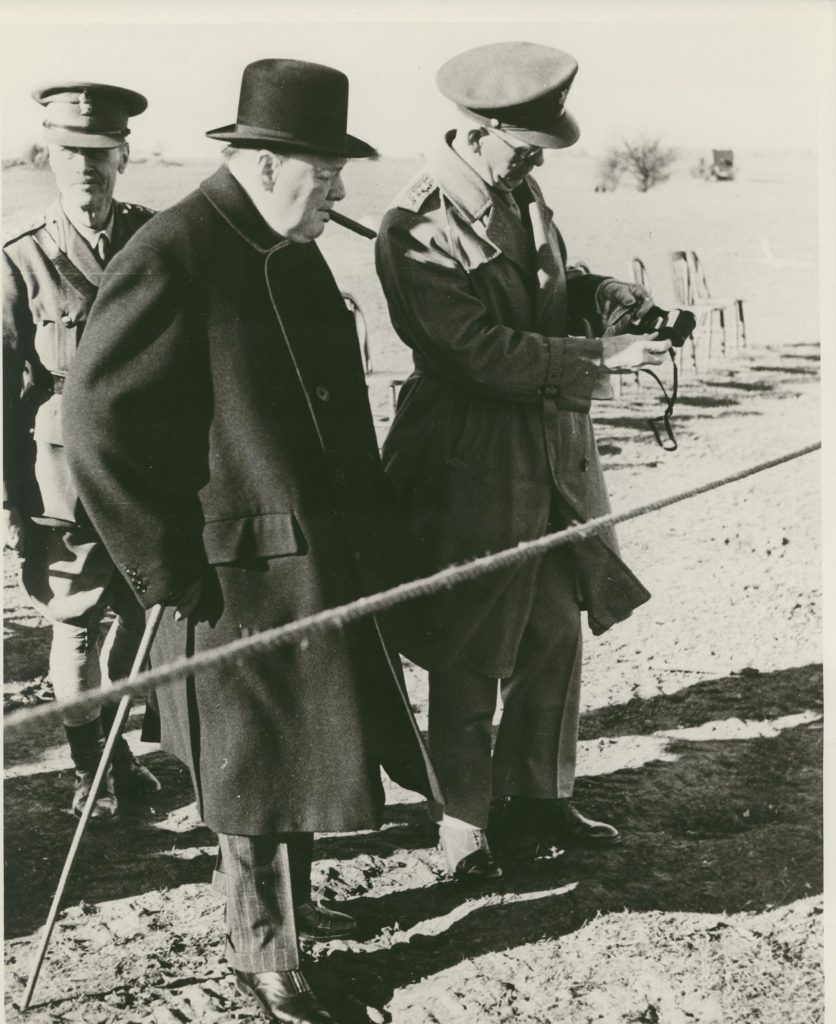
After Allied forces crossed the Rhine in March 1945, Winston Churchill sent this tribute to Washington recognizing Marshall’s achievement. Churchill’s phrase captures Marshall’s role in the war: he did not command the invasion in the field, but he built, trained, supplied, and coordinated the military machine that made Allied victory possible.
“Pray . . . give . . . [General Marshall] my warmest congratulations on the magnificent fighting and conduct of the American and Allied Armies under General Eisenhower, and say what a joy it must be to him to see how the armies he called into being by his own genius have won immortal renown. He is the true ‘organizer of victory.’”
Marshall visits Salisbury Plains on British Front along with Prime Minister Winston Churchill, April 1942
Rebuilding
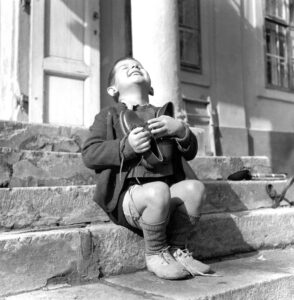
Marshall’s service did not end with victory. After World War II, he had to persuade Americans that their own security was tied to the recovery of Europe.
“I worked on that as hard as though I was running for the Senate or the presidency. That’s what I’m proud of, that part of it, because I had foreigners, I had tobacco people, cotton people… the whole West Coast going in the other direction… It was just a struggle from start to finish, and that’s what I’m proud of, that we actually did that and put it over.”
Marshall consistently resisted the idea that the Marshall Plan was only a brilliant concept. For him, the achievement was execution: legislation, persuasion, diplomacy, administration, and public support
“The idea wasn’t so much—in fact that is very little—but it’s the the execution that was the great trouble, and that posed a very heavy task.”
Speaking at Princeton in 1947, Marshall urged Americans to understand the country’s new responsibilities after World War II. This speech anticipated the logic of the Marshall Plan: American action, or failure to act, now mattered to world order.
“The development of a sense of responsibility for world order and security, the development of a sense of overwhelming importance of the country’s acts, and failures to act in relation to world order and security—these, in my opinion, are great ‘musts’ for your generation.”
Public Service as Civic Virtue
Marshall saw military service as one part of a larger civic obligation. Victory did not release citizens from responsibility; it prepared them for a different kind of service. In his 1945 Pentagon farewell speech, Marshall addressed the citizen-soldiers who had won the war. He called on them to become informed civic leaders in the peace that followed.
“It is to you men of this great citizen-army to victory that we must look for leadership in the critical years ahead. You are young and vigorous and your services as informed citizens will be necessary to the peace and prosperity of the world.”
Maintaining the Republic
Marshall warned that liberty could not survive on memory, gratitude, or spectatorship alone. It had to be maintained by citizens who understood what was at stake. Marshall delivered this warning shortly after Allied victory in World War II. He feared that Americans would repeat the post-World War I pattern: demobilizing, forgetting danger, and becoming passive spectators rather than active citizens. At 250 years, Marshall’s example asks that Americans do the work of the republic rather than merely inherit its language.
“Now that an immediate peril is not plainly visible, there is a natural tendency to relax, and to return to business as usual, politics as usual, pleasure as usual. Many of our people have become indifferent to what I might term the long-time dangers to the nation’s security… The public appears generally in the attitude of a spectator—interested, yes, but whose serious thinking is directed to local, immediate matters. Spectators of life are not those who will retain their liberties nor are they likely to contribute to their country’s security.”
Support Us
The George C. Marshall Foundation preserves Marshall’s papers, supports research, and shares his example of public service with new generations. Your gift helps sustain that work.